
Koji Fermentation
Experience in TokyoUMAMI & KOJI LAB
Created especially for international guests visiting Japan. Learn real koji making by hand in a modern Tokyo home kitchen, and carry the knowledge and the technique back to your own.
- English support throughout
- Solo travelers welcome
- Vegan-friendly
- Private, max 4 guests
- Languages
- English, with English-speaking support staff
- Duration
- Approx. 3.5 hours
- Group size
- Private, max 4 guests
- From
- ¥65,000 per person
Built for a short stay in Tokyo
UMAMI & KOJI LAB was made for guests visiting Japan from abroad. Many travelers meet Japanese food through umami — and in Japanese cooking, that depth usually arrives through fermentation. At the centre of that fermentation sits koji — a mold whose enzymes take rice apart and rebuild it as sweetness and depth. This is the session where you meet it directly.
Our own systematic course, the Fermentation Planner program, is taught in Japanese and has its students grow koji themselves, which genuinely takes several days. A traveler on a short Tokyo stay cannot come back day after day. So this program was designed the other way around: different stages of the koji-making process are prepared in advance, allowing guests to understand the full journey within a one-day experience. Nothing is hurried — your own koji was sown three days before you arrived, and the rest of the journey is laid out beside it.
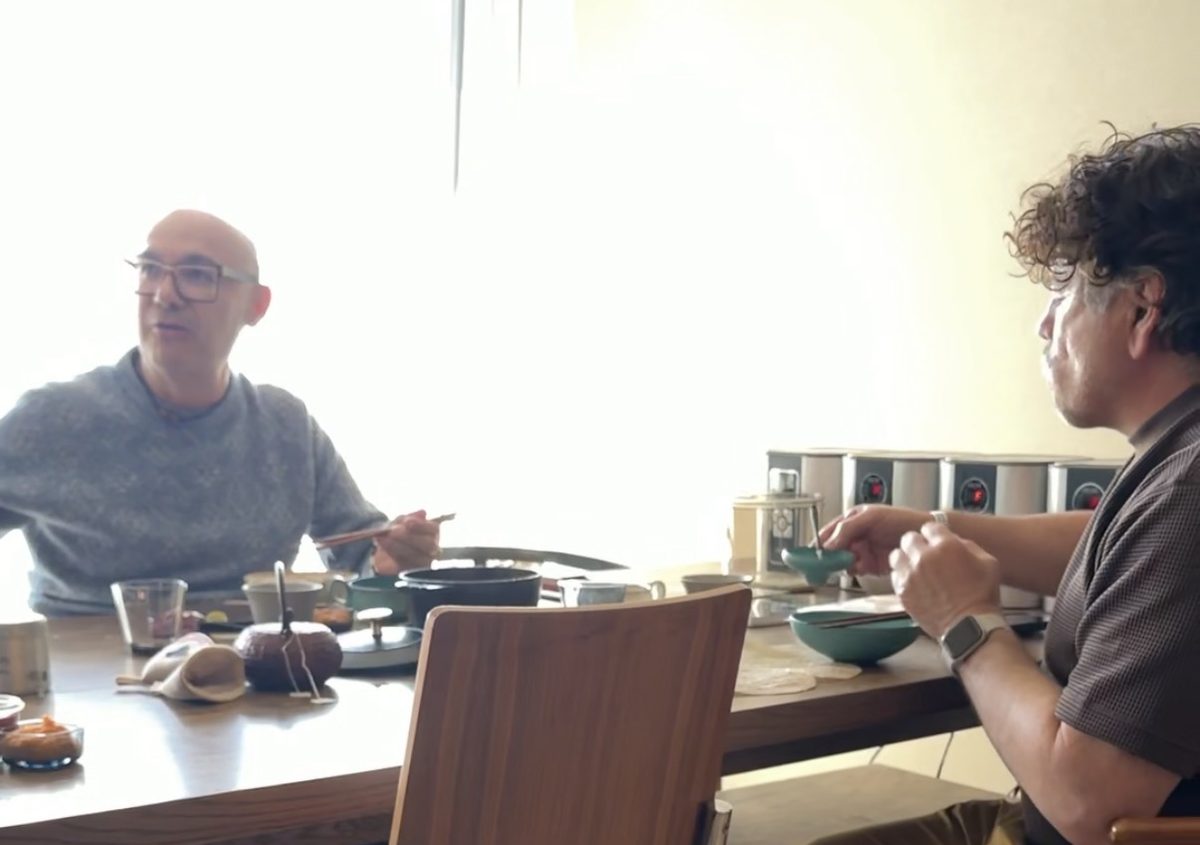
It is not a large cooking school, and it is not a tourist facility. It is a real kitchen in the middle of Tokyo, where the koji actually grows, where you sow the spores yourself and look at the living mold under a microscope — Japanese food culture, fermentation and microbiology, learned with your hands. Beginners are welcome and nothing is assumed; if you already follow fermentation or microorganisms, there is a good deal further to go.
- ENGLISH SUPPORT THROUGHOUT — English-speaking support staff are arranged for every session, including the technical parts
- SOLO TRAVELERS WELCOME — many guests come alone; couples, friends and groups of up to four book the same private session
What is Koji?
Koji is Japan's national mold — the quiet soul behind miso, soy sauce, sake, and mirin. For over 1,000 years, it has lived in Japanese homes, transforming humble ingredients into something profound. Now, it lives in ours.
Koji is the heart of Japanese fermentation culture. Its enzymes break rice and soybeans down into sugars and amino acids — which is where umami begins, and why so many traditional Japanese foods taste the way they do.
Koji doesn't just ferment food. It ferments time itself.
In this intimate session, chef and author Chie Ando opens her Jingumae kitchen to share the science, the craft, and the living culture that makes Japanese food unlike anything else on earth.
Step Inside the Kitchen
One minute on koji itself — not on the lesson, not on us. Rice becoming sweetness, salt becoming depth, time becoming nourishment: a thousand years of careful hands, still at work in a modern Tokyo home.
On the day, a second film is waiting for you — a full explanation, narrated in English, that takes you far deeper into the world of koji and fermentation.
Three and a half hours, step by step
Serious fermentation, in a kitchen the size of yours. Everything below happens with your own hands — and all of it fits inside one book you take home, so none of it stops when you leave.
Watch first, touch second
Before anything else, a film — narrated in English. What koji actually is, what fermentation does, how it meets your gut microbiome, and how the seasonings you're about to make are made.
Meet four molds, not one
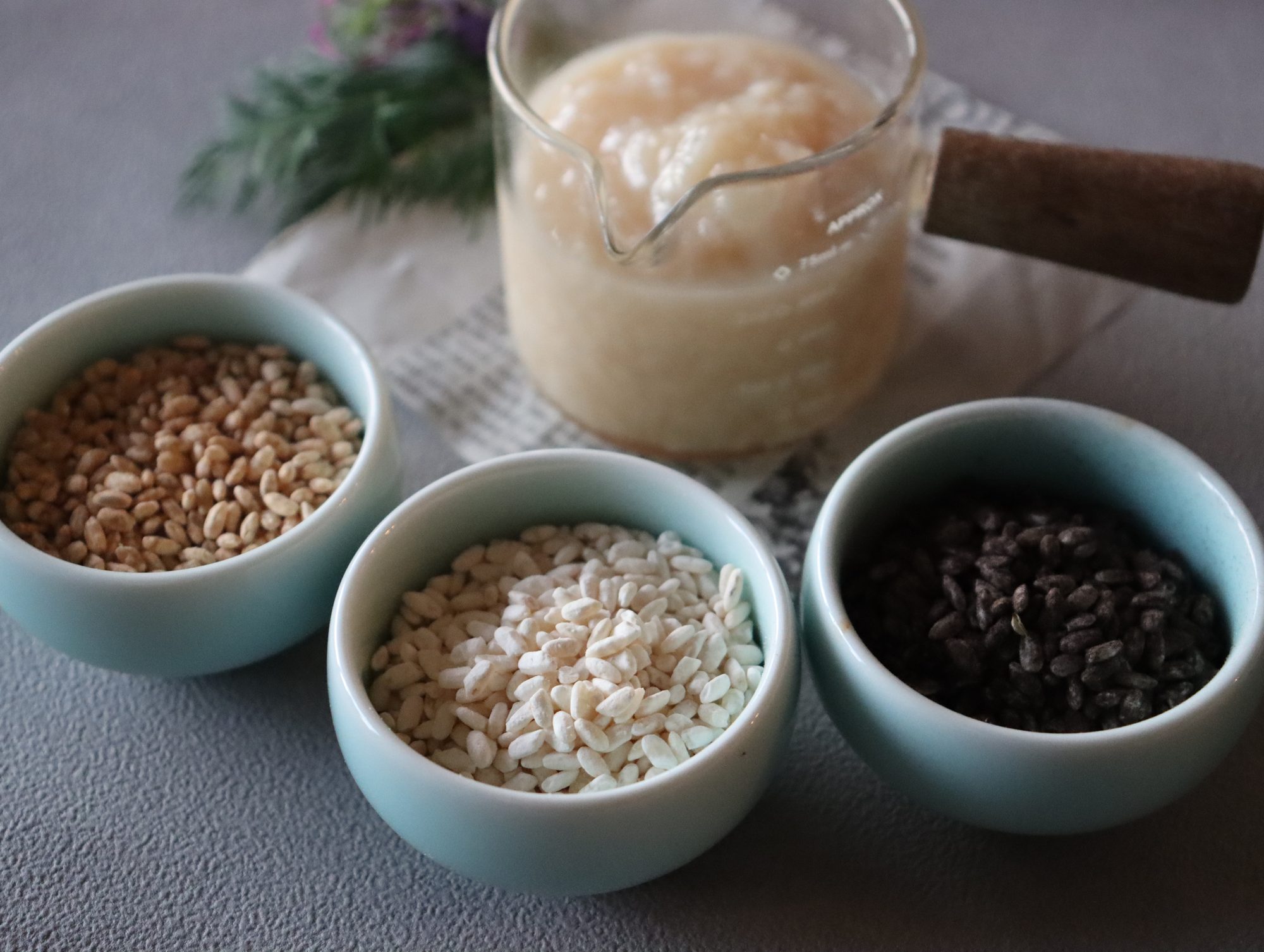
Yellow, black, white and red koji, side by side. One family, four different organisms, four completely different flavours. Most people in Japan have only ever met the yellow one.
Sow the spores yourself
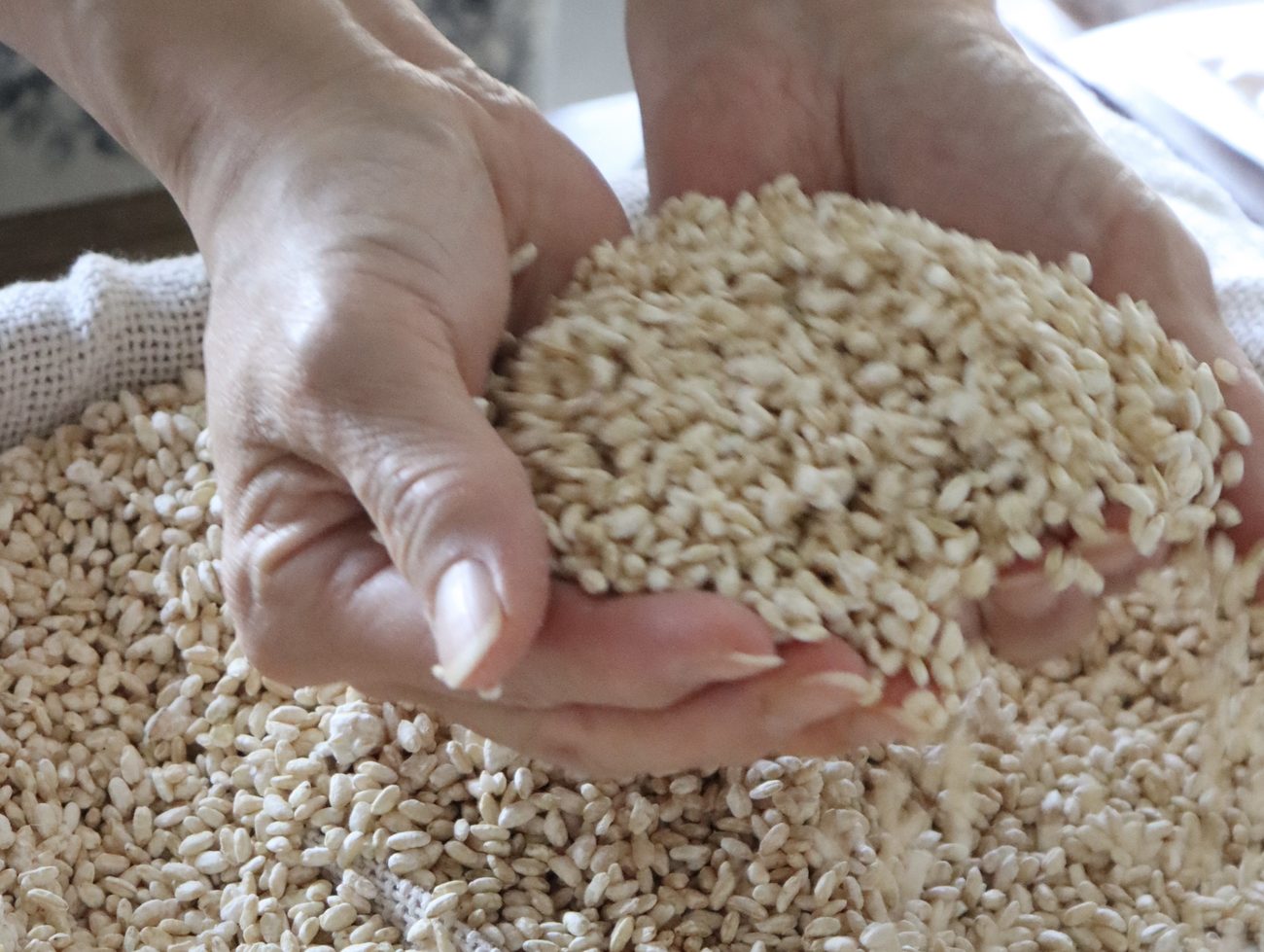
You'll inoculate steamed rice with tane-koji — the seed spores — with your own hands. This is the step that turns rice into koji, and almost nobody outside a brewery has ever done it.
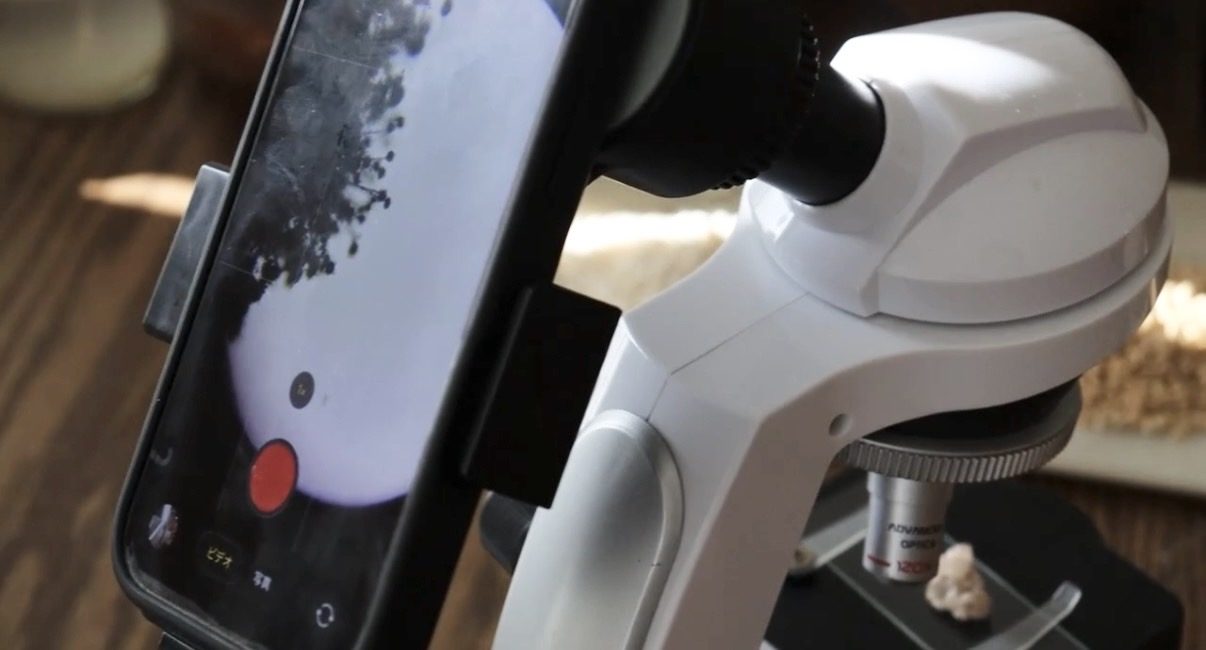
Koji-no-hana, under the microscope
Koji-no-hana — "the flower of koji" — is the white bloom that opens as the mold matures. You'll see it alive, magnified, with your own eyes. Not a diagram. The organism itself. This is the part everyone reaches for their phone.
Four seasonings, demonstrated
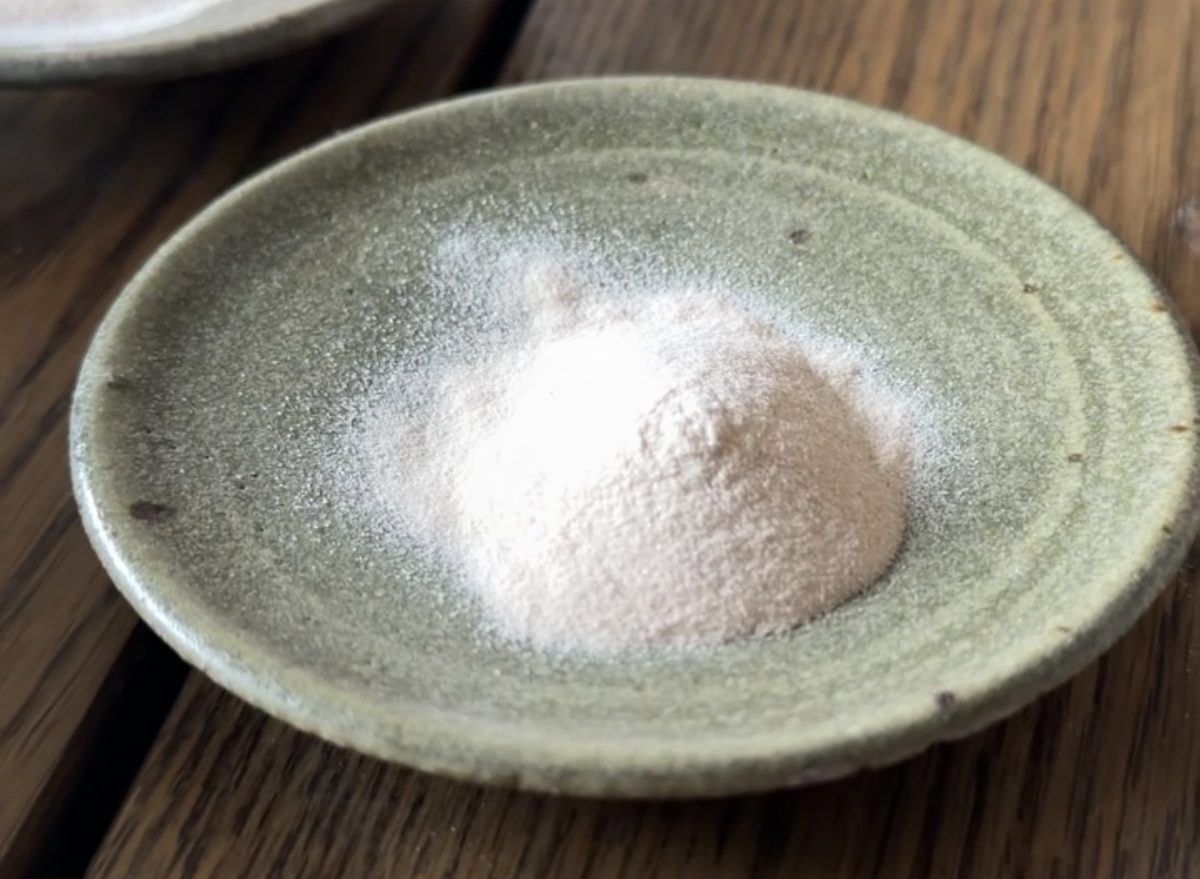
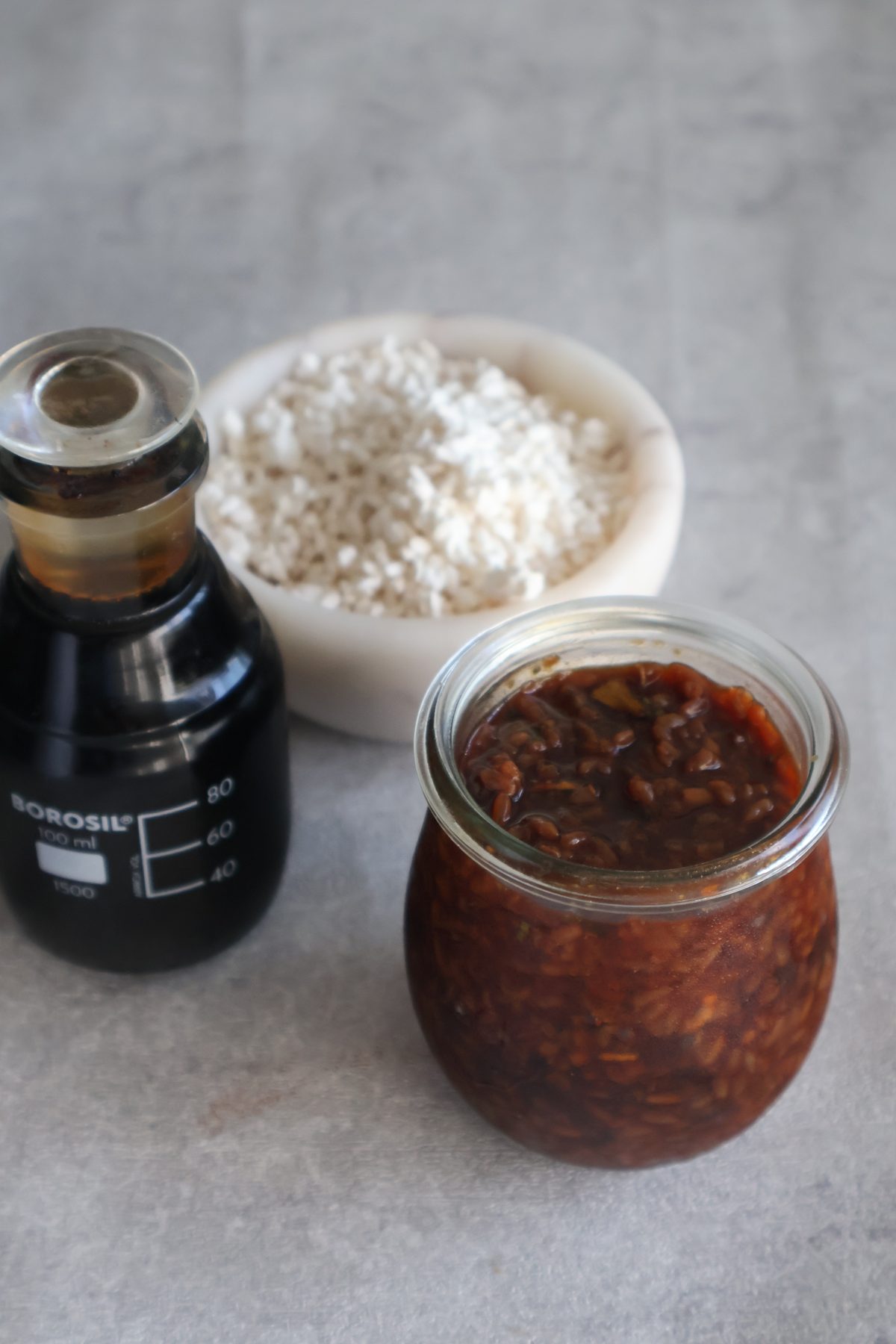
Shio-koji, ama-koji, shoyu-koji — and shoyu itself. Each one made in front of you, start to finish. You don't rush through them here: you go home with sealed koji and a soy sauce kit, and make all four in your own kitchen, at your own pace.
The tasting
Amazake, black-koji amazake, shio-koji and shoyu-koji, tasted side by side. The two amazake begin as the same rice. They taste nothing alike — and neither contains a grain of sugar. This is the one that surprises everybody.
Cook lunch, and learn to cook it again
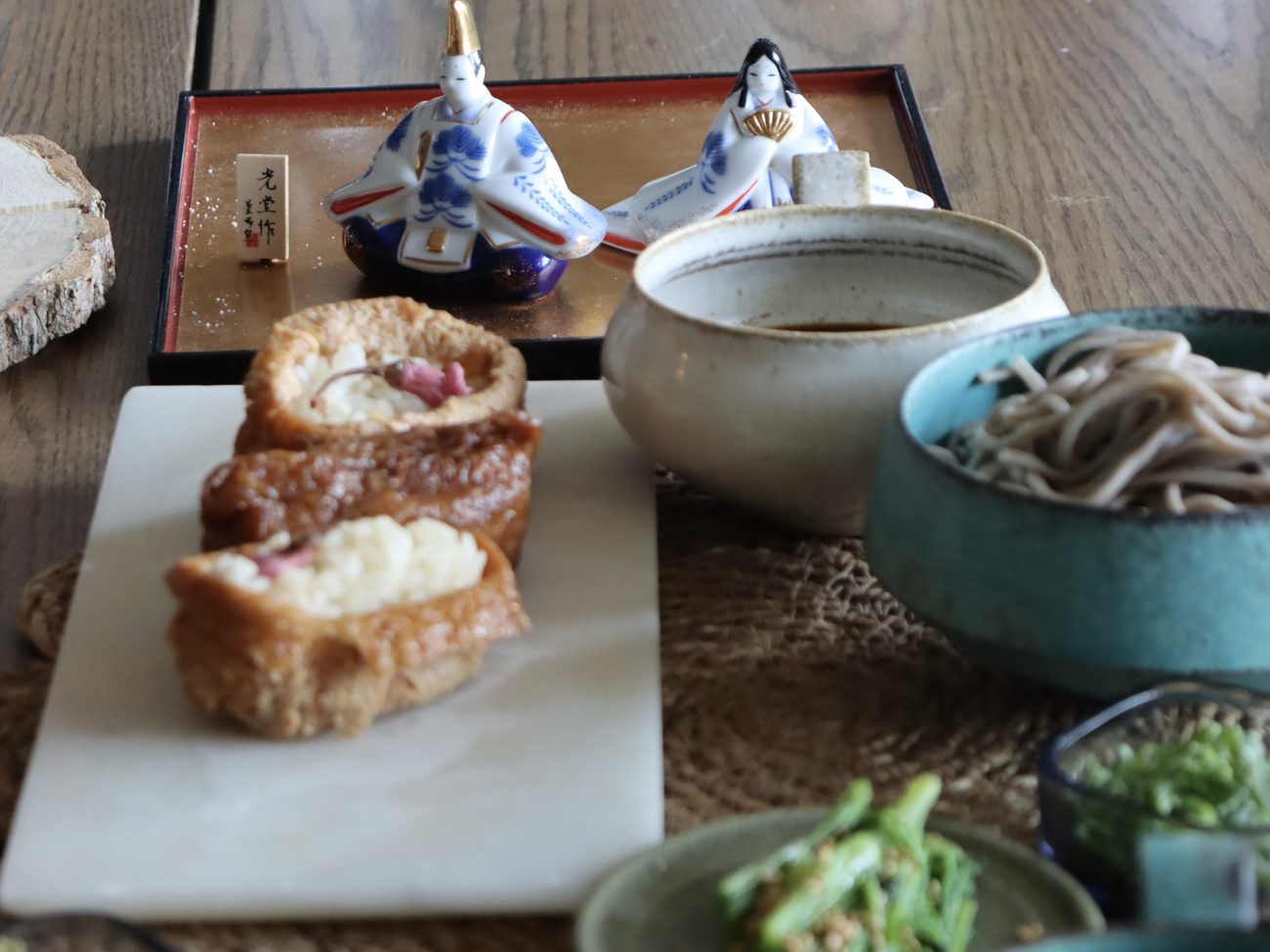
We make lunch together using the seasonings you've just met — taught slowly enough that you can repeat it at home, not just eat it here.
Miso is not one thing
Climate, water and local culture have produced dozens of misos across Japan, and they barely resemble one another. You'll taste the difference rather than read about it.
The rare shelf
Chie's own cacao koji — made nowhere else in the world — alongside a run of ferments most people in Japan have never encountered.
What it actually looks like
Your fermentation journey continues
What you take home is not a souvenir. It is knowledge of koji, an understanding of how fermentation works, and the technique to do it again — in your own kitchen, with your own rice.
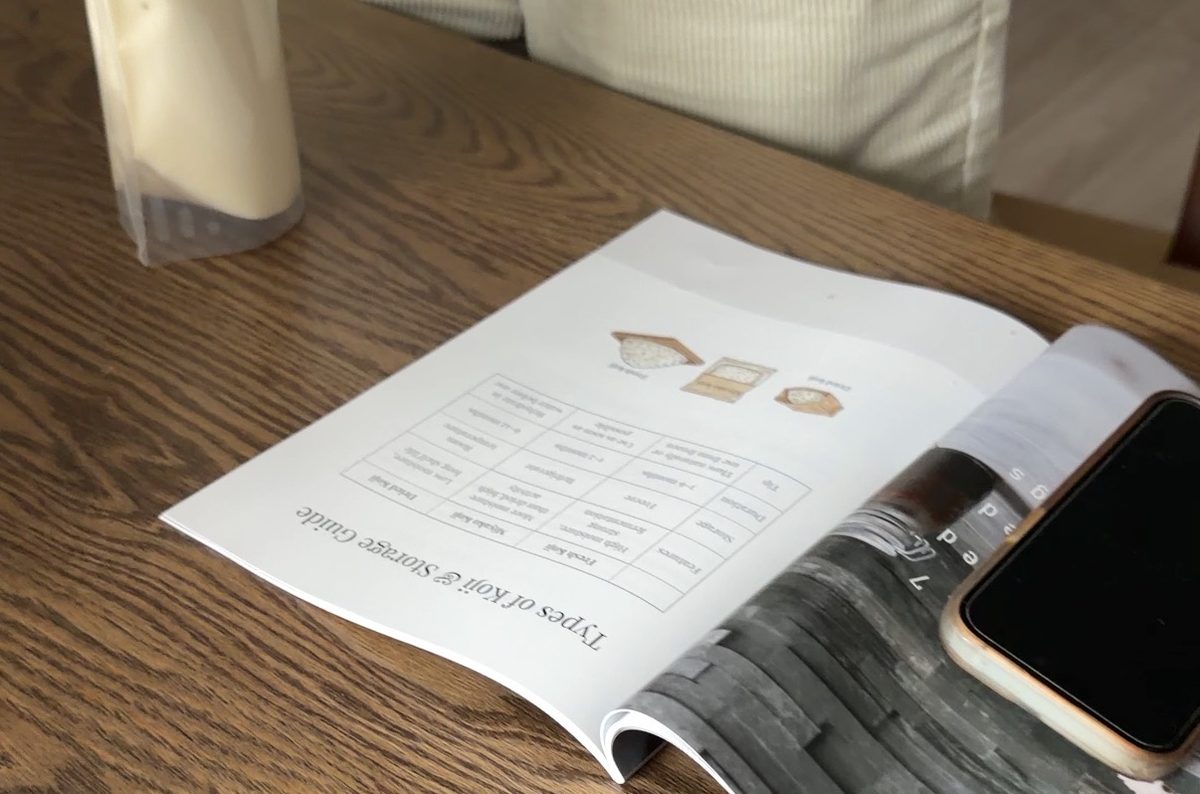
That is rather the point. You start it here, on this counter, and open it twelve months from now in your own kitchen. One afternoon in Tokyo, a year of it afterwards — and everything you need is in the one book you carry out the door.
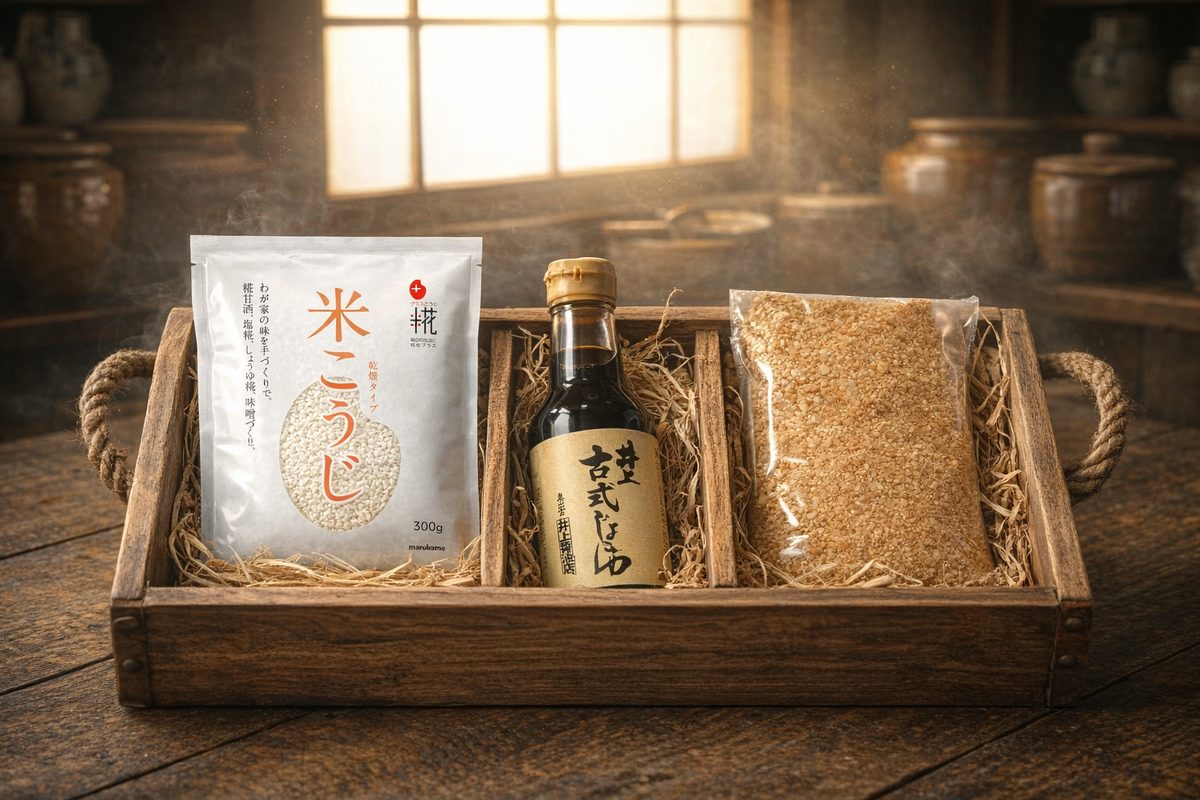
- RICE KOJI — sealed, ready to make shio-koji and amazake at home
- AGED SOY SAUCE — a kit that keeps working for months in your own kitchen
- KOJI GRAINS — to keep going after the first batch
- TEXTBOOK INCLUDED — signed, and the whole session is in it

Plant-based friendly. Naturally.
Every session can be prepared fully vegan — just let us know when you book.
- VEGAN
- GLUTEN-FREE OPTION
- NUT-FREE
- SOY-FREE OPTION
Please write any allergies or special requests in the reservation form and we will confirm what we can prepare for you.
Details
| Made for | International guests visiting Japan — travelers whose time in Tokyo is short. |
|---|---|
| Languages | English, with English-speaking support staff alongside Chie for the full session. Japanese is also spoken. |
| Duration | Approx. 3.5 hours |
| Group size | Private, max 4 guests. Solo travelers are welcome, and no strangers join your group. |
| Location | &LAB TOKYO — Jingumae, Shibuya-ku, Tokyo. The full address is sent with your booking confirmation. |
| Includes | Lunch, all tastings, rice koji, an aged soy sauce kit, koji grains and a signed textbook for every guest. |
| Bookings close | 4 days before the session — your koji needs three days to grow. |
Book Your Experience
Private session · 1–4 guests · 3.5 hours. From ¥65,000 per person. Better together — every guest you add lowers the price for everyone.
| 1 guest¥100,000 total | ¥100,000per person |
|---|---|
| 2 guests¥160,000 total | ¥80,000per person |
| 3–4 guests¥195,000–260,000 total · best value | ¥65,000per person |
- Prices above are per person. Tax included. The session is private — no strangers join your group.
- A starter kit and a signed textbook are included for every guest.
- English-speaking support staff work alongside Chie for the full 3.5 hours, so you can follow every part of the session — including the technical parts — in English. Included in the price above, at no extra charge.
- Consumption tax (10%) applies to all experiences and is included in the listed price. Tax-free shopping exemptions do not apply to services provided in Japan.
Prices as of this date.
Booking & cancellation
Your session is held for your group alone. From the moment you book, the date closes to everyone else, English-speaking support staff are scheduled, and ingredients are ordered in for you specifically. Three days before you arrive, your koji is sown — and it cannot be paused, reused, or moved to another date.
| Reservations close | 4 days before the session |
|---|---|
| 30 days or more before | Free — full refund |
| 29–15 days before | 30% charged |
| 14–8 days before | 50% |
| 7–5 days before | 80% |
| Within 4 days, or no-show | 100% |
We're sorry to be strict about this one. By the time we're inside that window, your koji is already growing — and it only grows once. Full terms are shown again when you book.
Frequently asked questions
What language is the session held in?
English. English-speaking support staff are arranged for every session and work alongside Chie for the full 3.5 hours at no extra charge, so you can follow the technical parts — the molds, the enzymes, the method — in English as well. Japanese is also spoken.
How long does it take, and how many people join?
About 3.5 hours. Every session is private for one to four guests — no strangers join your group.
Can I join as a solo traveler?
Yes. Many guests come alone, and solo travelers are welcome. Couples, friends and small groups of up to four book the same private session; the price per person is lower the more of you there are.
Do I need a background in science or cooking?
No. Nothing is assumed, and no cooking or laboratory background is needed. The detail is there if you want it — four koji molds side by side, koji-no-hana alive under the microscope, and what the enzymes are actually doing to make umami.
Can the session be made vegan, or work around allergies?
Yes. Every session can be prepared fully vegan, and gluten-free and soy-free options are available. The session is nut-free. Please tell us when you book so we can prepare for you.
What do I take home?
Rice koji, an aged soy sauce kit, koji grains and a signed textbook — one set for every guest. The whole session is written up in the book, so you can make all four seasonings again in your own kitchen.
How much does it cost?
From ¥65,000 per person, tax included. One guest is ¥100,000, two guests are ¥80,000 each, and three to four guests are ¥65,000 each. Every guest you add lowers the price for everyone.
Koji takes days to grow. How does one session cover that?
It does take days, and we do not pretend otherwise. Different stages of the koji-making process are prepared in advance, so that within a one-day experience you can follow the full journey: the spores you sow with your own hands, koji partway through, and koji finished. Your own batch was sown three days before you arrived. The program was designed this way because it was built for travelers, whose time in Tokyo is short.
How late can I book?
Reservations close four days before the session, because your koji is sown three days before you arrive and needs that time to grow.
What is the cancellation policy?
Free up to 30 days before. 30% from 29–15 days before, 50% from 14–8 days, 80% from 7–5 days, and 100% within 4 days or for a no-show. Once your koji has been sown it cannot be paused, reused, or moved to another date.
Where is it held?
At &LAB TOKYO in Jingumae, Shibuya-ku, Tokyo — a private home kitchen. The full address is sent with your booking confirmation.
Can I do a longer, multi-day koji-making program?
If you are interested in a deeper multi-day koji-making program, please contact us and we will discuss it with you. It is not one of the options priced above.
Reserve your seat
Bookings close 4 days before your session — your koji needs three days to grow. Please write here if you have any allergies or special requests. We'll reply within three business days to confirm your date.