

Fermentation:
from making to growing. The Fermentation Alchemist Course
Grow koji. Read fermentation. Create your own flavour.
Not only making shio-koji (salt koji) or amazake.
Knowing koji, knowing the microbes, and growing it with your own hands.
Fermentation learned step by step, in four stages: know, deepen, create, pass on.
- Four steps
- Know → Deepen → Create → Pass on
- Format
- Jingumae, Tokyo / online
- Taught by
- Chie Ando, in person
For people who want fermentation to be more than a recipe.
- “I can make shio-koji and amazake. But I don’t really understand why they ferment.”
- “I want to know more about fermentation. One day, I’d like to grow my own koji.”
- “I want to work with fermentation by thinking for myself, not just following a recipe.”
- “I want what I learn to feed into my cooking, my work, and passing it on to others.”
Understand fermentation with your hands, not just your head.
Four steps to making fermentation your own.
Know → Deepen → Create → Pass on
Know
Get to know fermentation and microbes, and bring them into everyday cooking.
Read more → 02|ADVANCEDeepen
Grow koji from rice, and handle fermentation with your own hands.
Read more → 03|MASTERCreate
Apply the science of fermentation to create your own flavour.
Read more → 04|HAKKO SOKA®Pass on
Take what you have learned into your work, your classes and your community.
Read more →
BasicThe Fermentation Alchemist Course — Basic
Start with how koji works.
The first step to bringing fermentation into your everyday cooking.
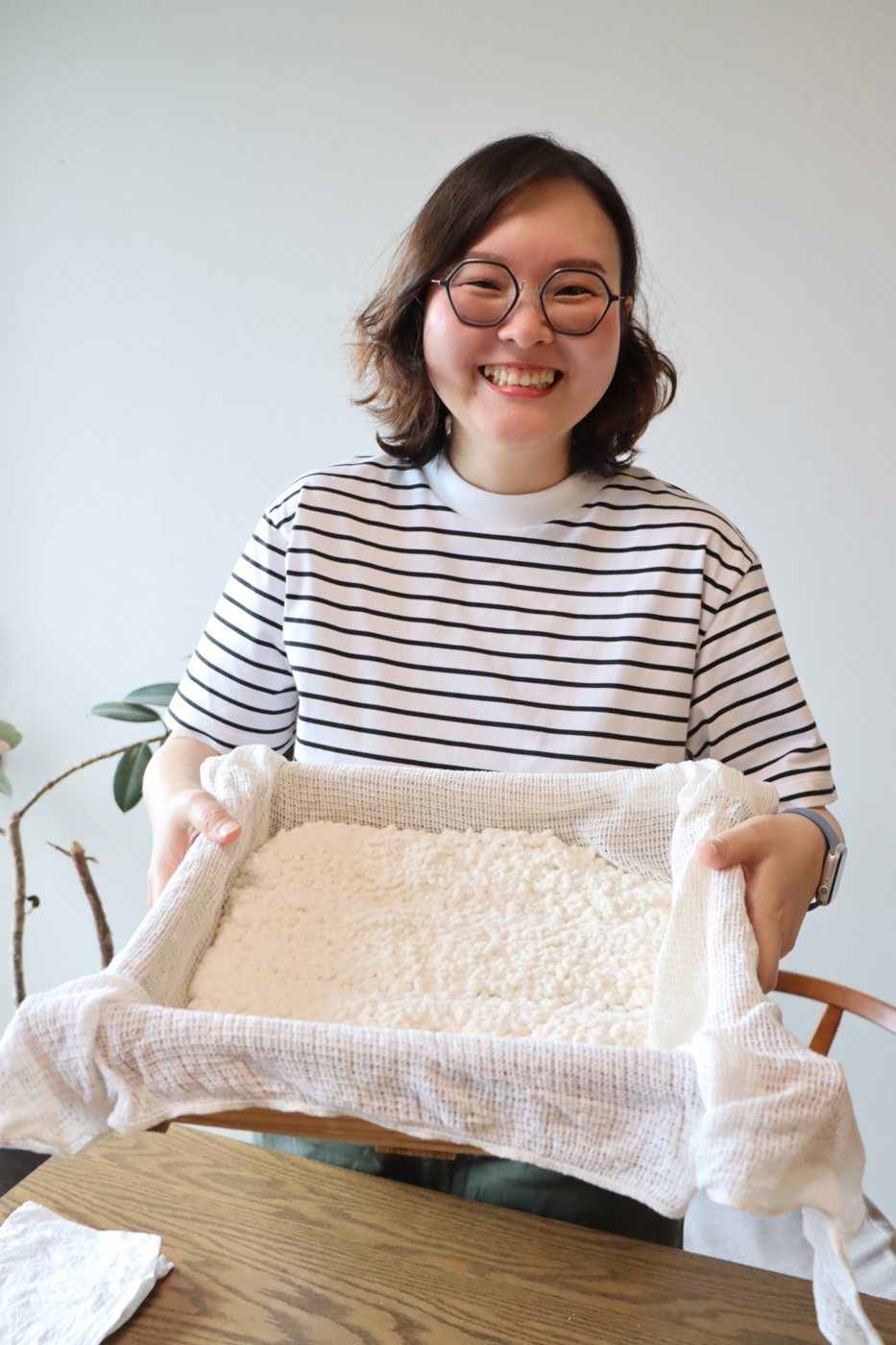
While making the basic koji seasonings — shio-koji, ama-koji, shoyu-koji and onion koji — you learn, gently and from the start, how fermentation works, why temperature matters, what microbes do, and where fermentation comes from.
You also make a no-knead dough and watch it ferment. For lunch, you cook with the koji seasonings you made: either a Japanese meal, or a Western one to enjoy with bread.
Make it, watch it, taste it. A whole day of enjoying fermentation for the first time.
A gentle, rich life, with fermentation in it.
Start Your Fermentation Journey- 01
Learn
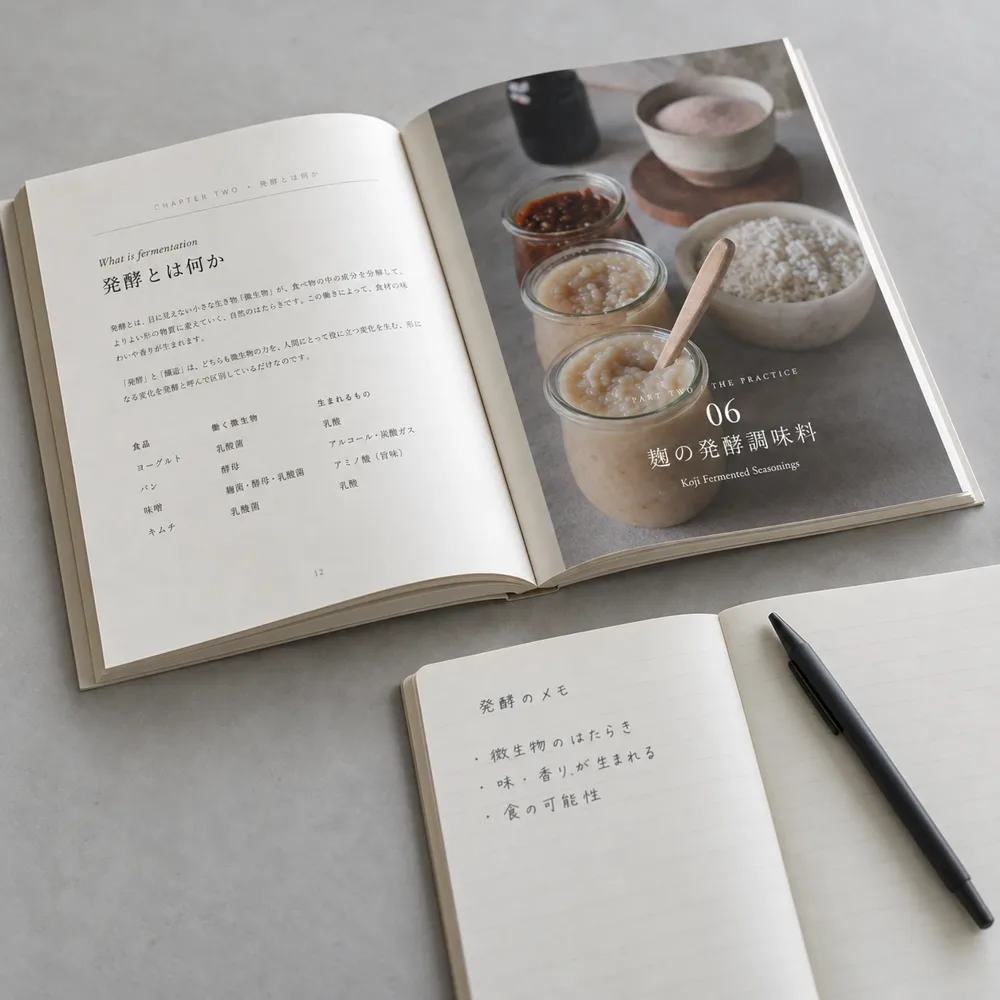
What is fermentation, in the first place? You start with the basics and the history, and with koji, yeast and lactic acid bacteria.
- 02
Prepare
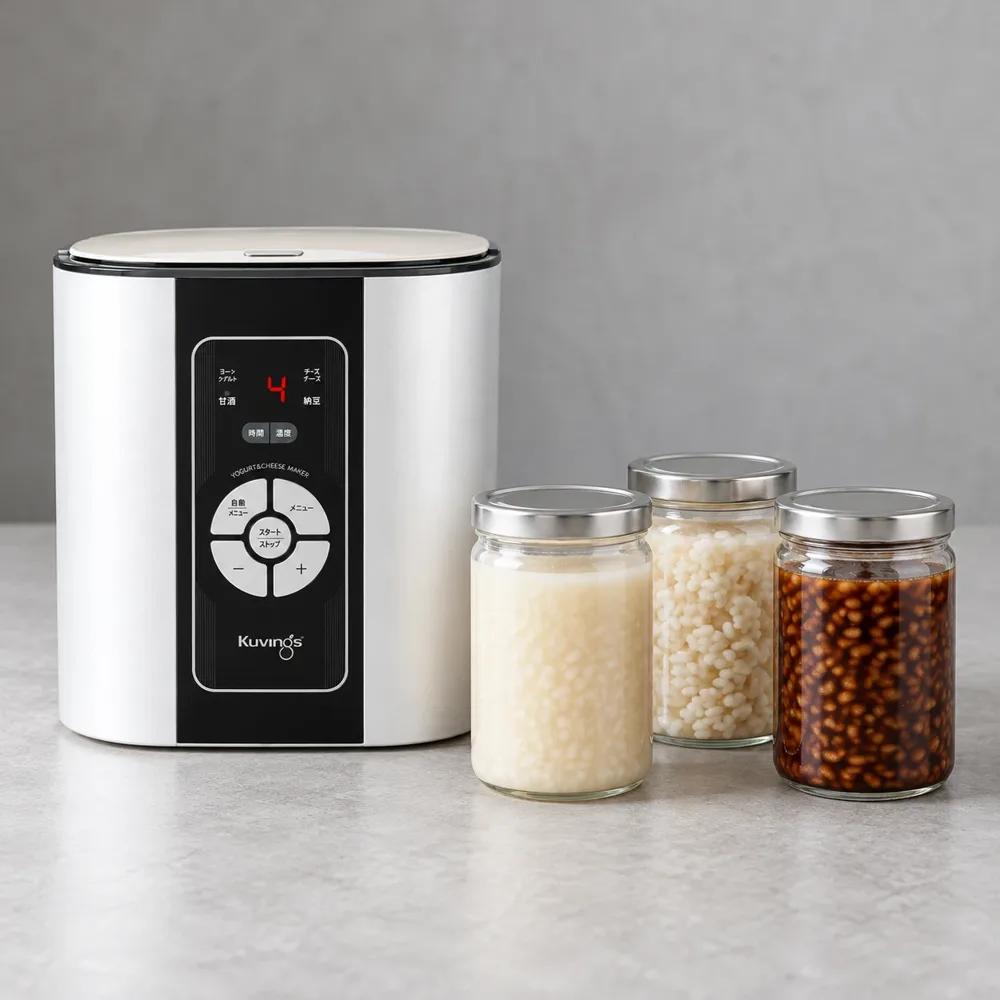
You set four koji seasonings going in a yoghurt maker, and learn how fermentation and temperature are connected.
- 03
Watch it ferment
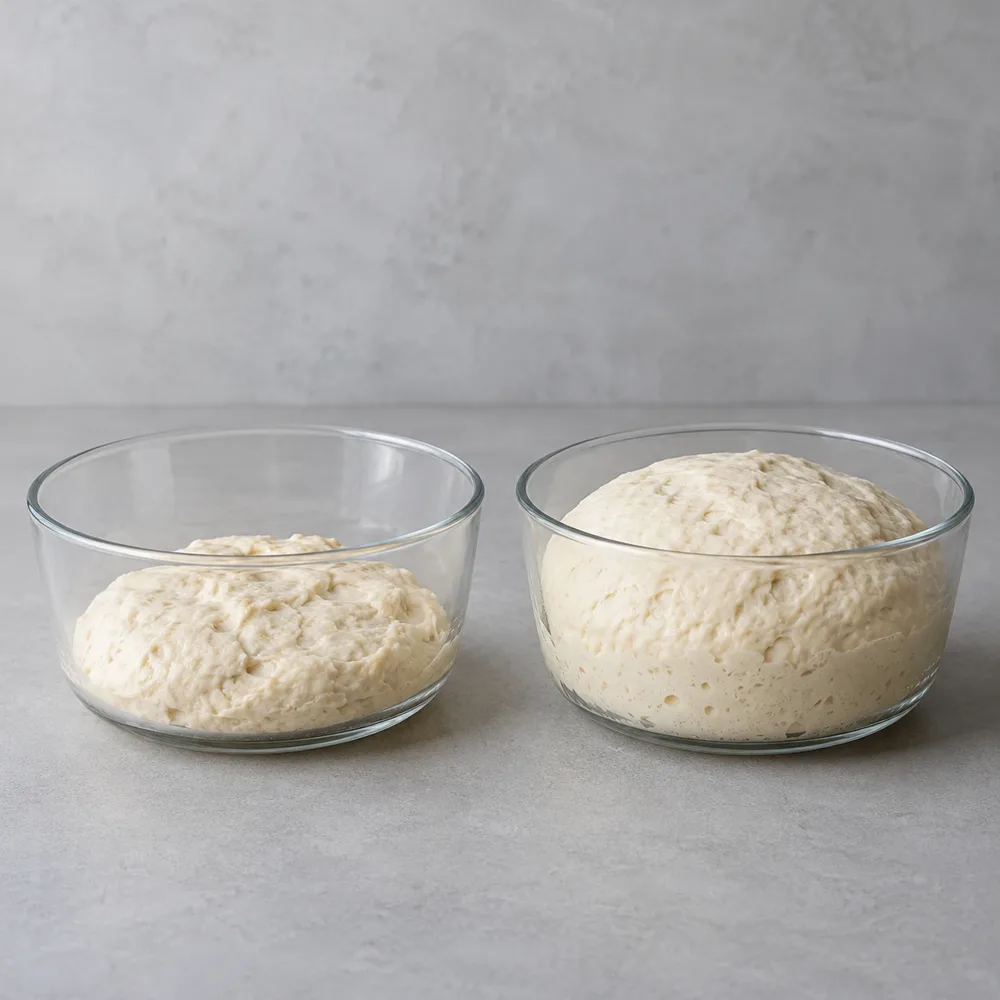
You make a no-knead dough and watch it ferment. From there it can become bread, pizza, focaccia and more.
- 04
Cook
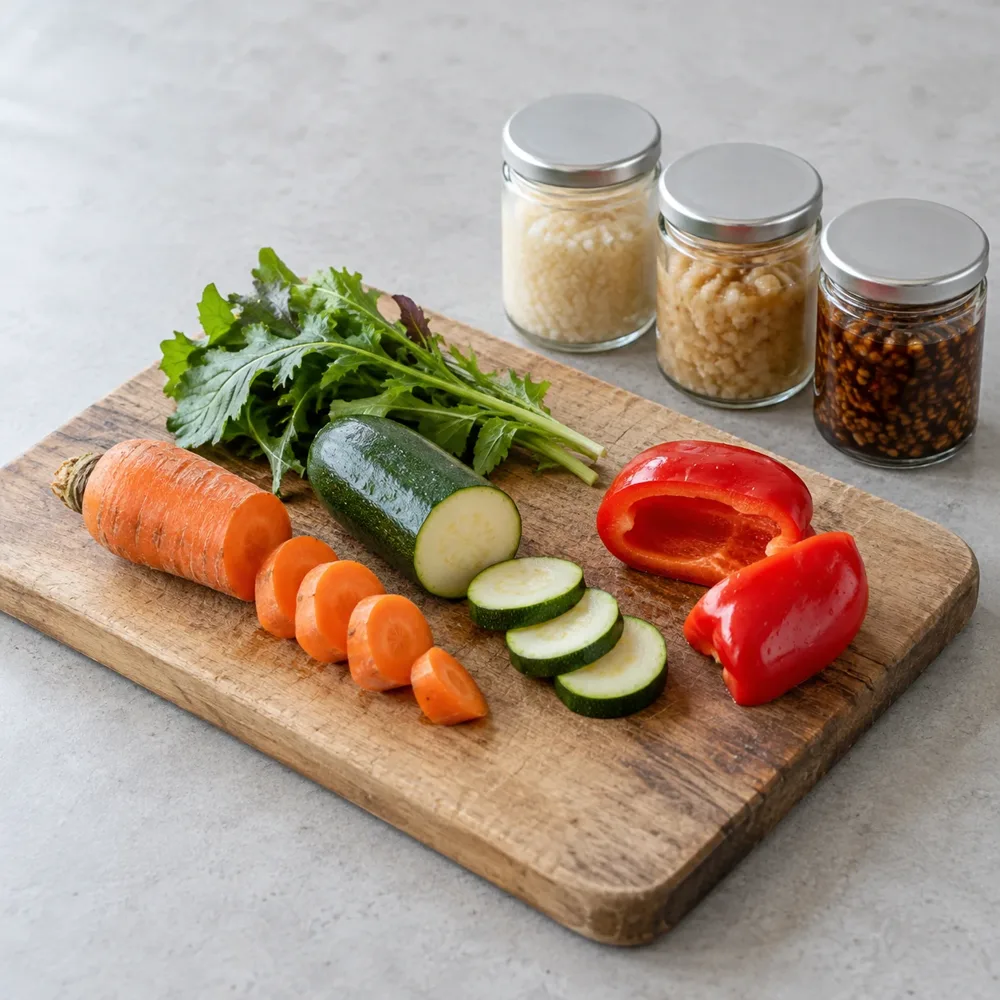
You cook lunch with the koji seasonings you made. Some days it is Japanese; some days it is a Western meal to enjoy with bread.
- 05
Taste
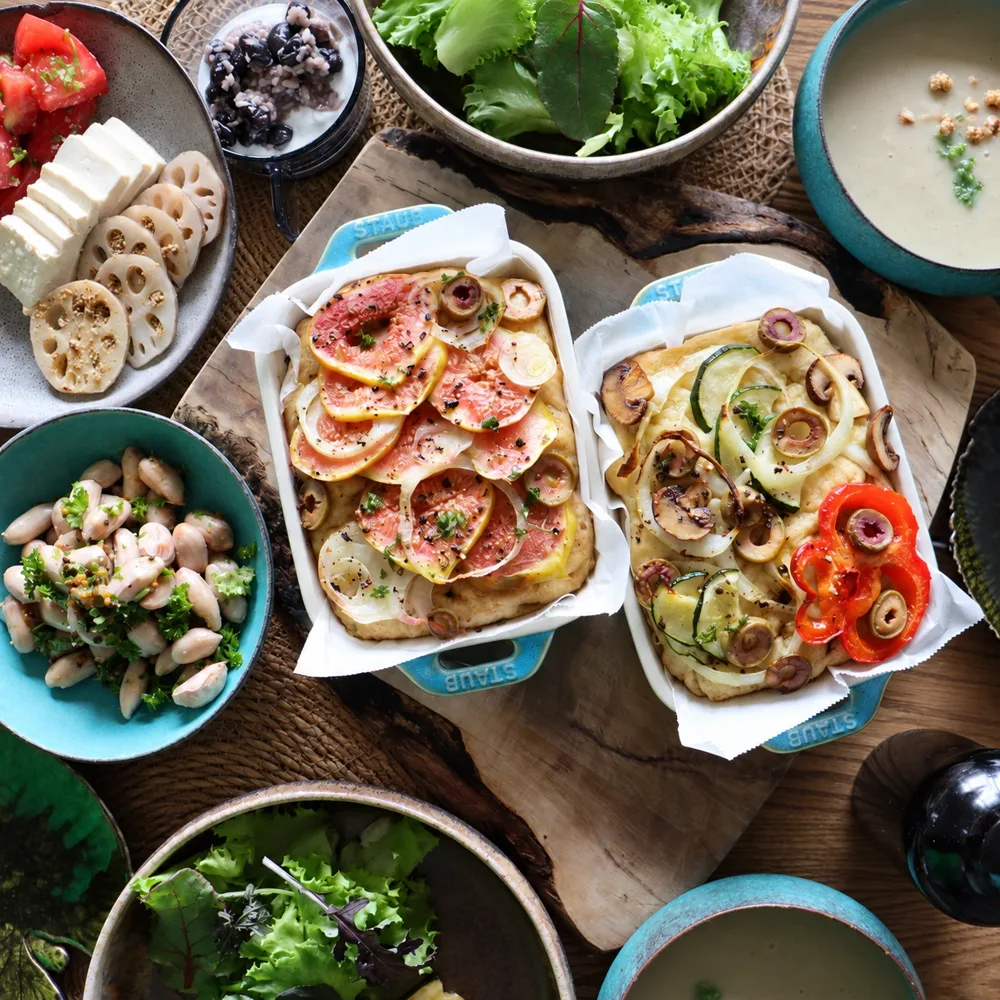
The koji seasonings you made are packed for you to take home. Then we sit down together to the lunch we cooked.
What you will learn
- The basics and history of fermentation (fermentation cultures of Japan and the world)
- What microbes do (koji mould, yeast, lactic acid bacteria)
- Fermented seasonings, from the basics to using them
- Shio-koji and ama-koji
- Fermented tomato ketchup
- Moromi shoyu and onion koji
- COYO (coconut yoghurt)
- Fermented vegan butter
- No-knead bread
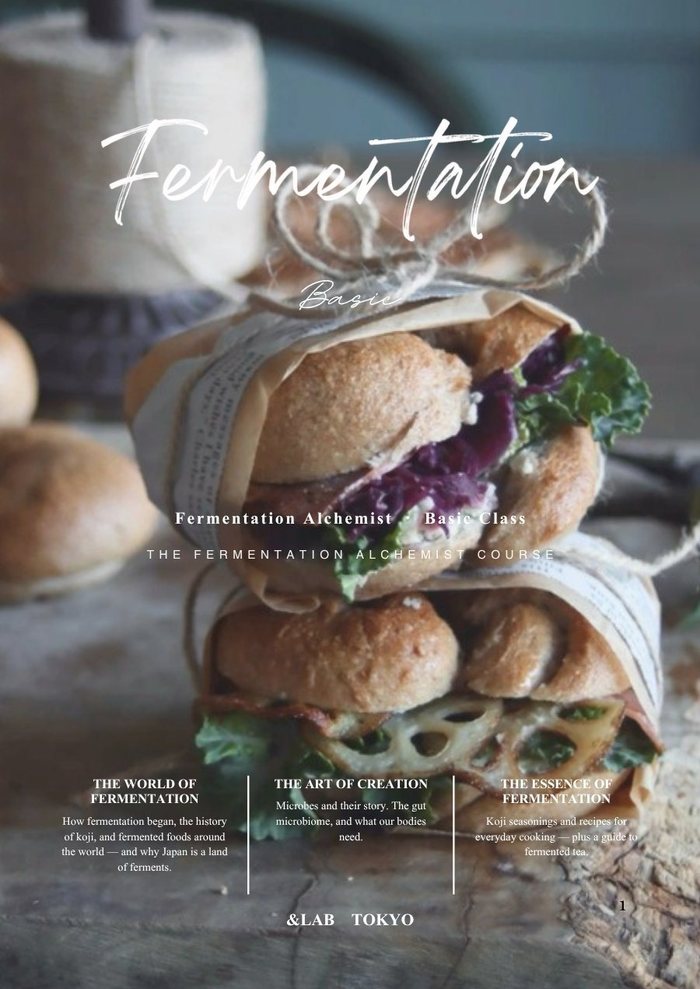
From the textbook’s recipes
A selection of the recipes in the Basic official textbook.
- Koji seasonings
- Shio-koji, Ama-koji, Shoyu-koji, Onion koji, Koji ketchup
- Bread and dairy alternatives
- No-knead bread (focaccia, anpan), Homemade COYO (coconut yoghurt), Homemade fermented butter, Vegan soy milk yoghurt
- Fermentation lunch
- Shoyu-koji dip with seasonal vegetables, Bagna cauda-style shoyu-koji sauce, Caprese with shio-koji-marinated tofu, Beetroot and mushroom koji soup, Soy milk mayonnaise with shio-koji, Sweetcorn rice, Fermented hijiki okowa (steamed sticky rice), Grilled rice balls with shoyu-koji, Kabocha soup with onion koji, Salad with koji berry dressing
- Sweets, sauces and tea
- Ama-koji panna cotta, Ama-koji ice cream, Amazake granola, Five fermented yakiniku sauces, How to brew fermented tea
In the lesson, you cook with the fermented seasonings made that day. The dishes vary from session to session.


Basic is for you if…
- You are interested in fermented foods but don’t know where to start
- You want to be able to make shio-koji and shoyu-koji yourself
- You want to bring fermented foods into your everyday cooking
Basic + Advance, in three days.
Learn the basics of fermentation in Basic, then go straight on to making koji.
In three days, you can take Basic and Advance back to back.
It is a popular choice with people travelling from far away.
3 days | Basic + Advance | ¥156,000 (Tax excluded)
Normally ¥165,500 → Intensive ¥156,000
Two textbooks included
If you would like English support, we can arrange it — ¥15,000 per day, tax included.
Continue to Advance ↓
AdvanceThe Fermentation Alchemist Course — Advance
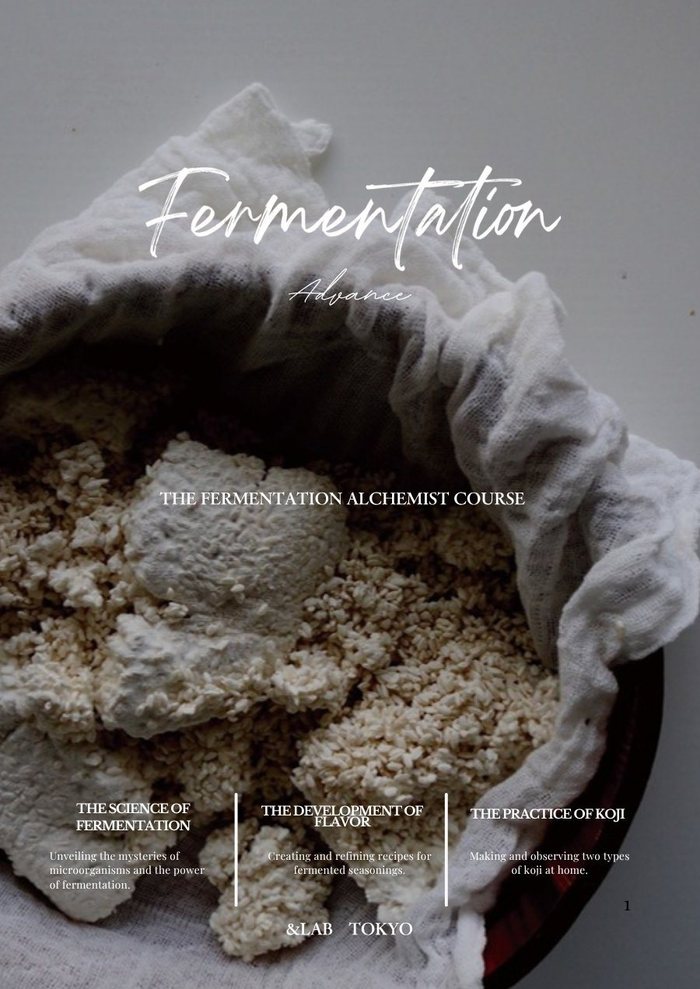
Three days of growing koji.
Making your own koji begins with sowing tane-koji on rice. As you grow it, watching the temperature, the aroma and the feel change little by little. On the third day comes dekoji, when the koji is taken out: koji you have grown yourself.
You then look at your koji under a microscope. When people spot the tiny spores, someone often says “So cute!” without meaning to.
Finally, you use your own koji to make miso. Sow, grow, observe, and turn it into miso. Three days in which you feel that koji is alive.
A special time, face to face with small living things.
Grow Your Own Koji- 01
Sow
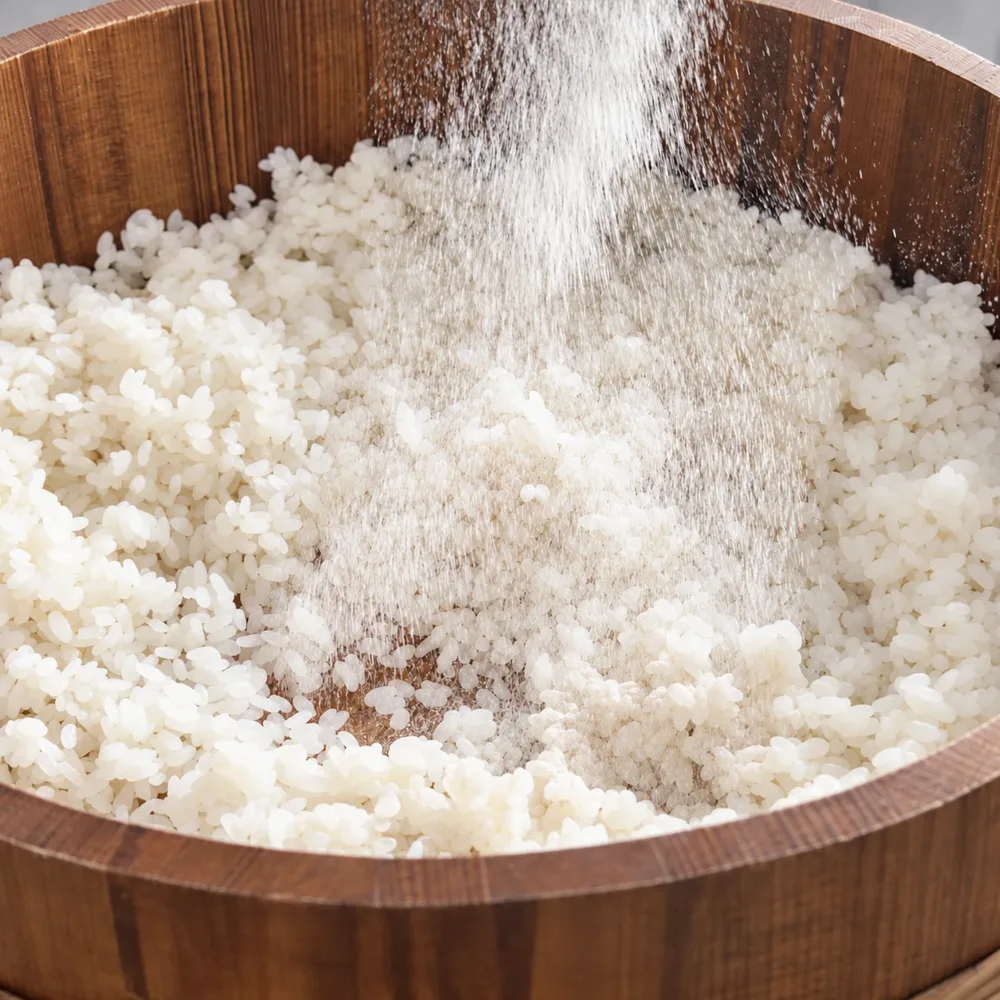
You sow tane-koji on white rice and brown rice. This is where your own koji begins.
- 02
Grow
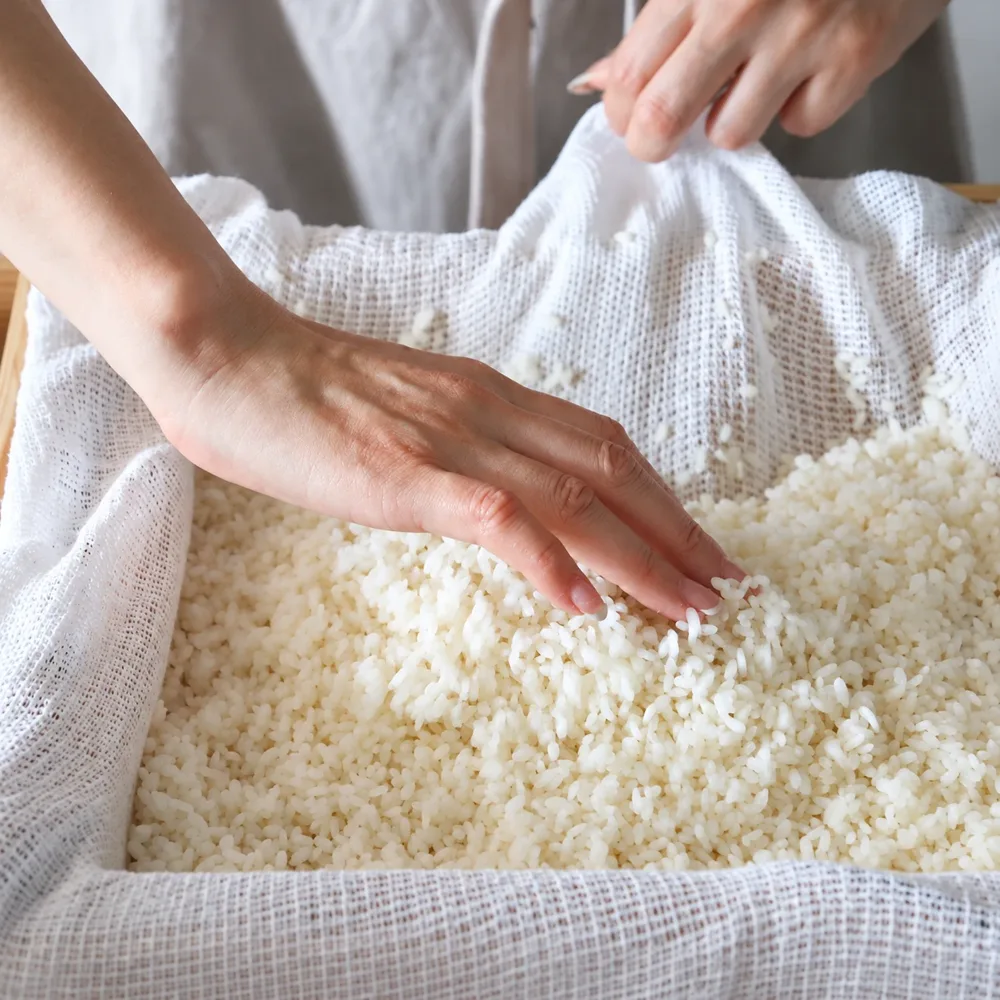
You grow two koji, one from white rice and one from brown, watching the temperature for about three days. Each day you notice how the aroma and feel have changed.
- 03
Dekoji
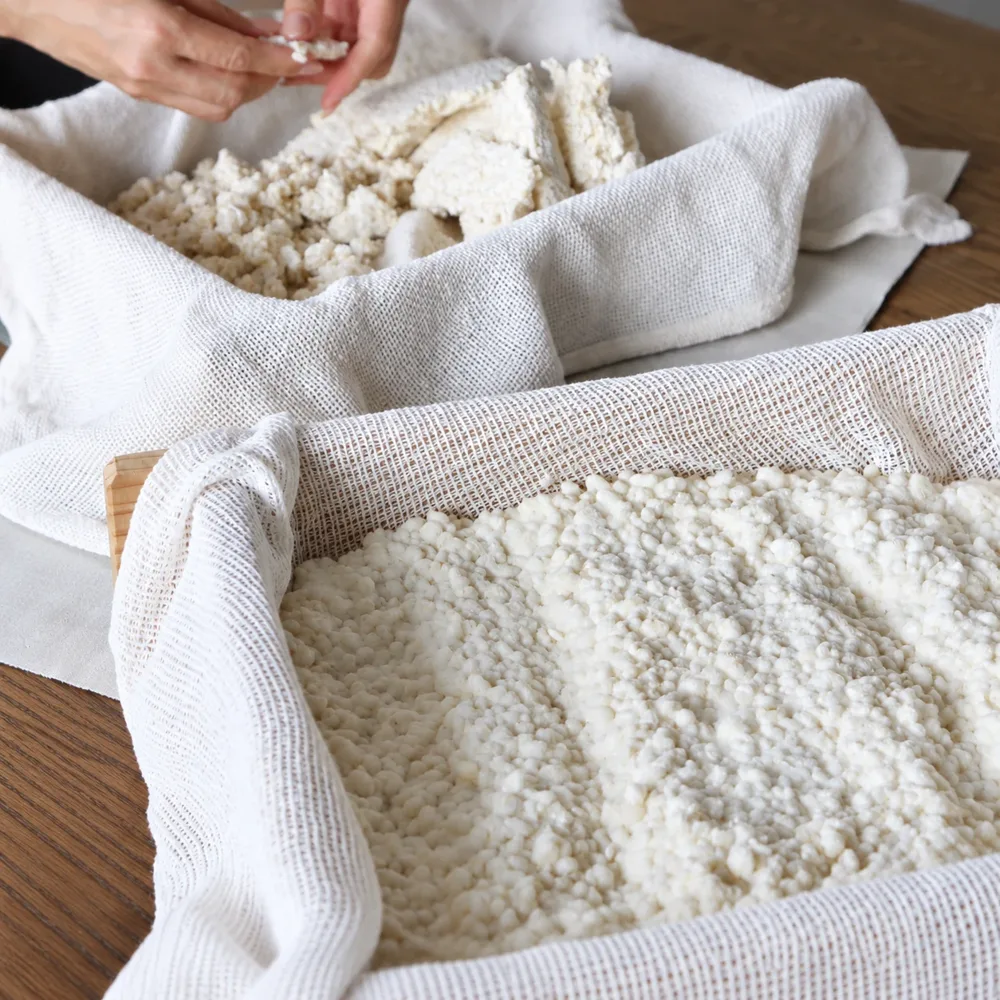
On the third day, the koji comes out. A soft aroma, and beautiful koji.
- 04
Take a closer look
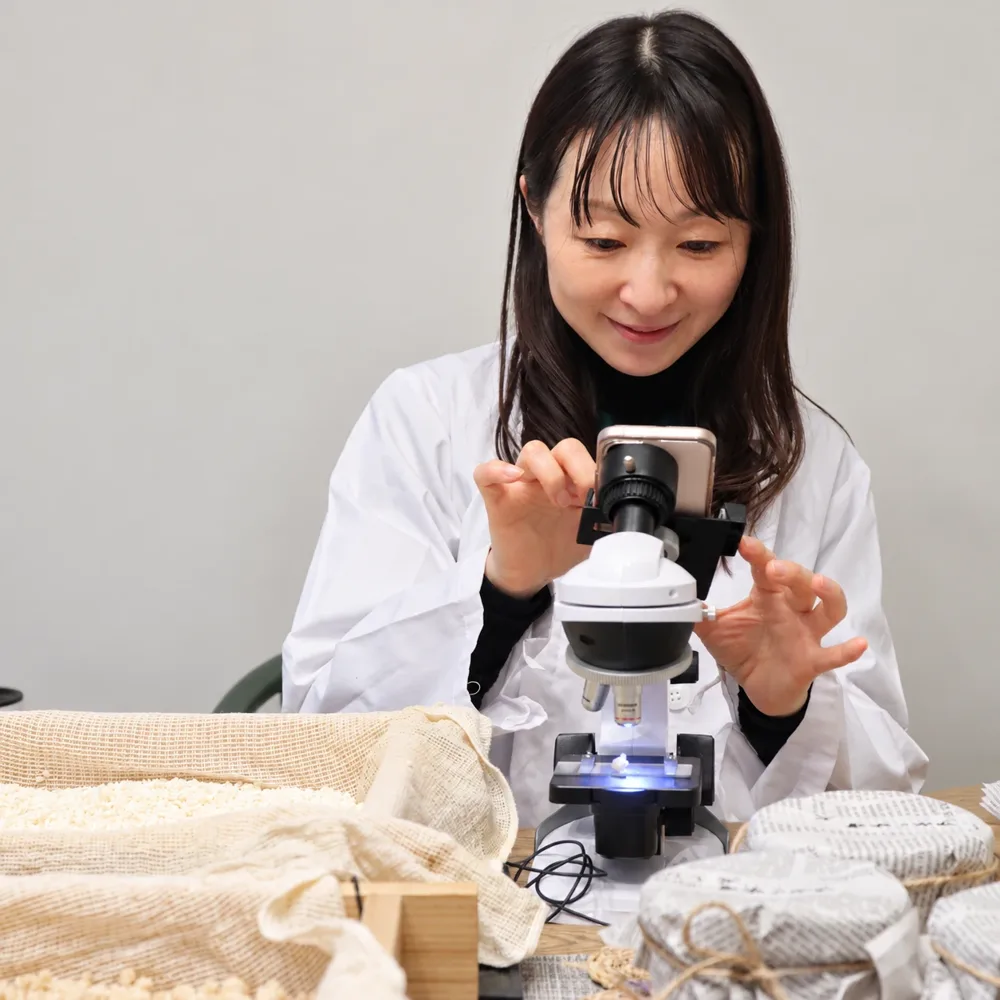
You look at your koji under a microscope. Spot the tiny spores, and you may find yourself saying “So cute!”
- 05
Make miso
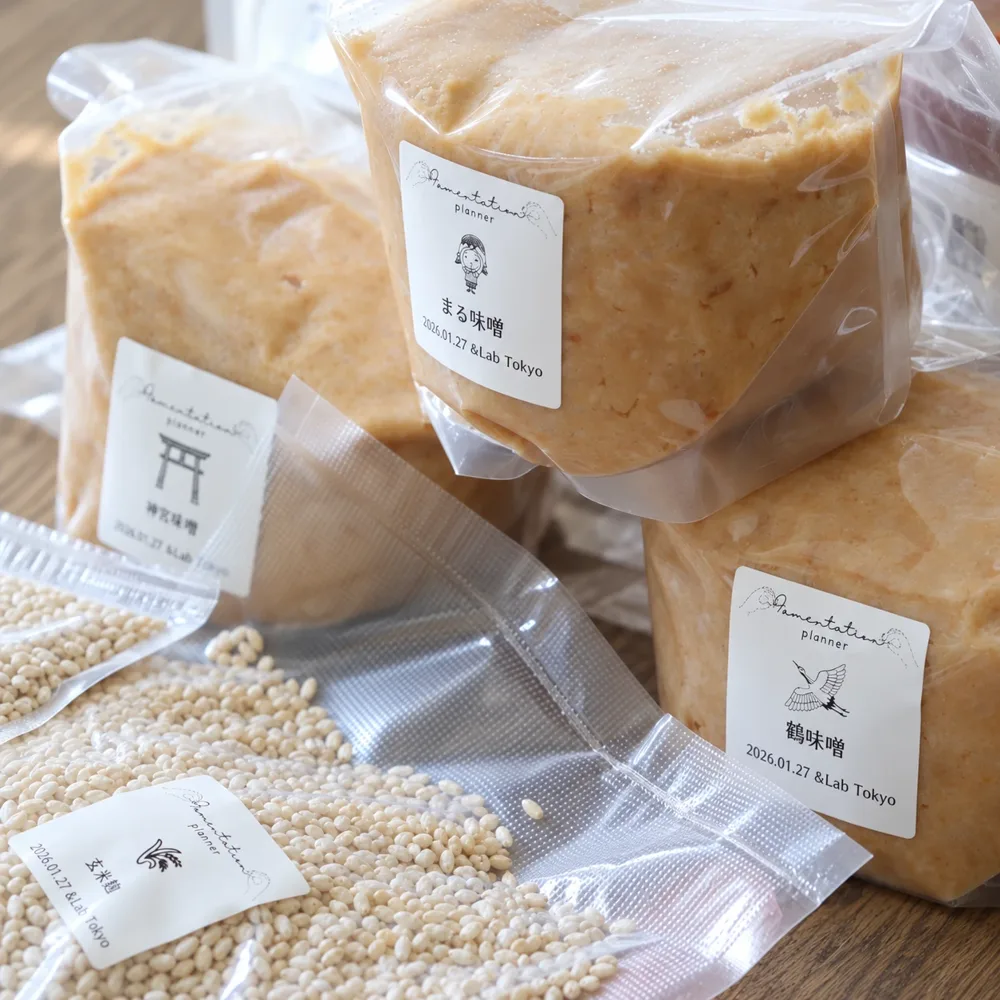
You make temae-miso (homemade miso) with the koji you grew yourself.
What you will learn
- Inoculating, growing and managing the temperature of koji
- Managing fermentation, and using fermented foods
- How acid, sugar and salt relate to fermentation
- Fermentation cultures and preserved foods of the world
- Miso, doubanjiang, fermented mustard, kimchi and more
- Fermented yakuzen cooking
From the textbook’s recipes
A selection of the recipes in the Advance official textbook.
- Making koji
- White rice koji, Brown rice koji (the three-day process and temperature control)
- Fermented seasonings
- Homemade shoyu, Temae-miso (homemade miso), Homemade doubanjiang, Homemade mustard, Vegan kimchi (yangnyeom, napa cabbage, cucumber, daikon), Fermented gochujang, Fermented spiced hishio-koji, Fermented ginger koji, Fermented garlic koji, Fermented brown rice and tomato koji, Sangohachi-zuke (koji pickles), Fermented anko
- Cooking with fermentation
- Vegan mapo tofu, Three fermented sauces, Spinach genovese, Fermented cake, Fermented yakuzen lunch (jujube and kabocha congee, wild mountain vegetable namul, yakuzen soup, nanohana japchae), Fermented Mediterranean (koji dal soup, dolma, wholemeal vegetable focaccia, okara malasadas)
In the lesson, you cook with the fermented seasonings made that day. The dishes vary from session to session.


Advance is for you if…
- You want to try making koji by hand
- You want to make your own fermented seasonings (shoyu, miso, vegan kimchi)
- You want to know more about the science of fermentation and about microbes

MasterThe Fermentation Alchemist Course — Master
Designing fermentation into cooking.
Koji, yeast, lactic acid bacteria, acidity, umami. Once you understand what each one does, fermentation becomes far freer.
Exploring black and white koji, sakadane yeast, fermented cacao and more, you move from “making what you were taught” to “making your own fermentation”.
- 01
Sow
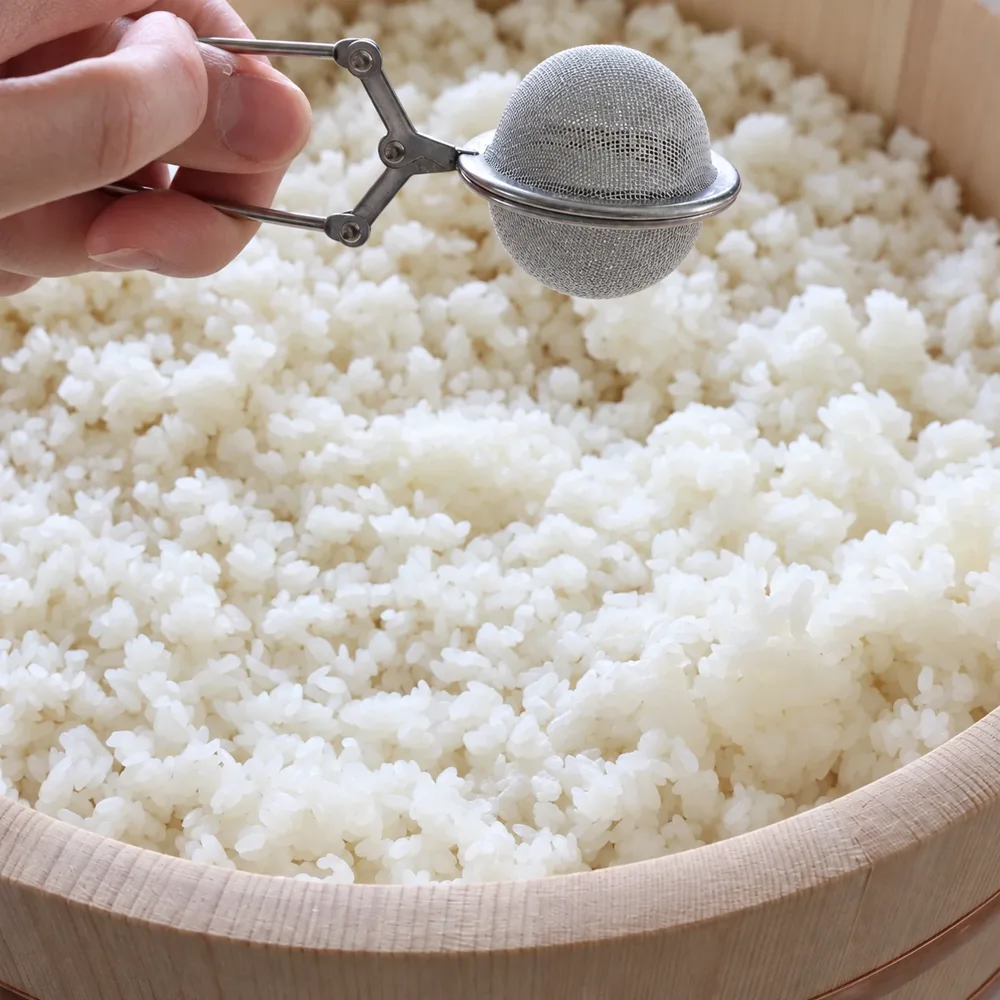
You begin by sowing black or white koji. You learn the character of each and get a feel for how different koji can be.
- 02
Dekoji
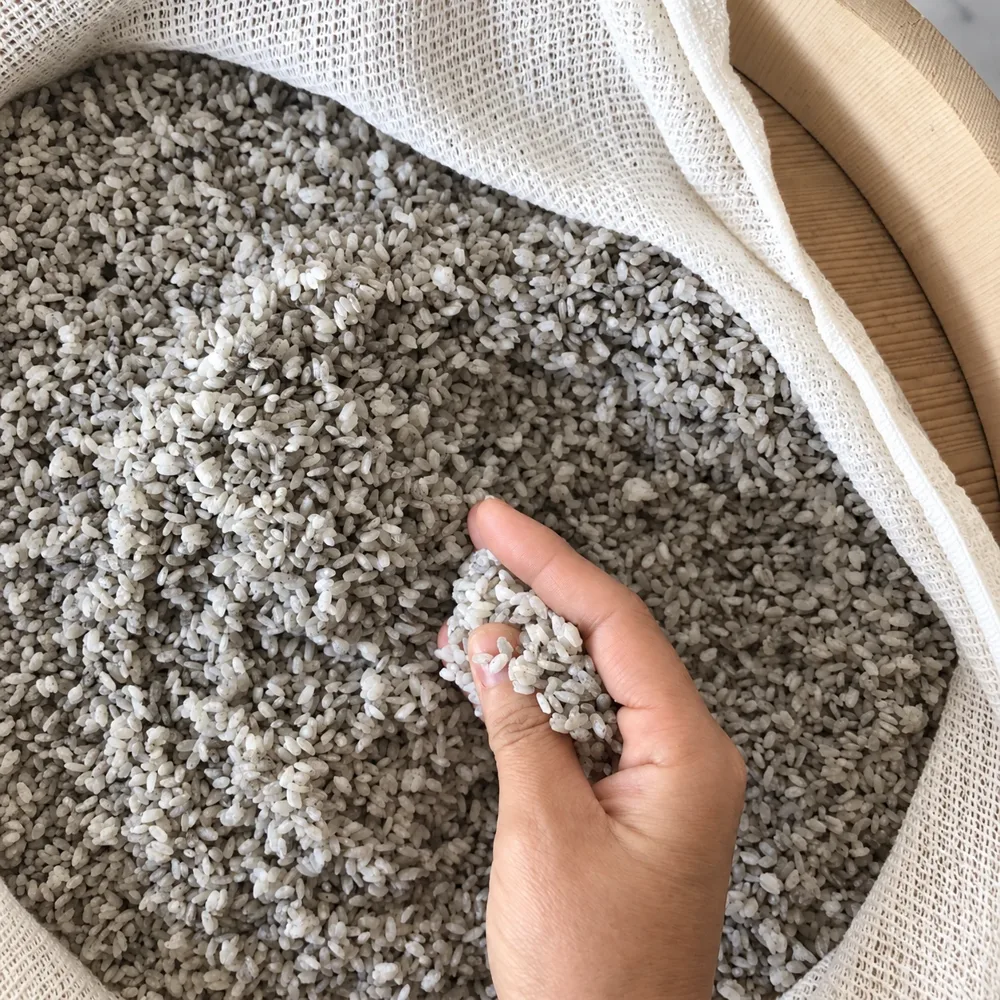
On the third day, the koji is ready, with a soft, spreading aroma. You observe the deep aroma and strong presence that are particular to black or white koji.
- 03
Make fermented seasonings
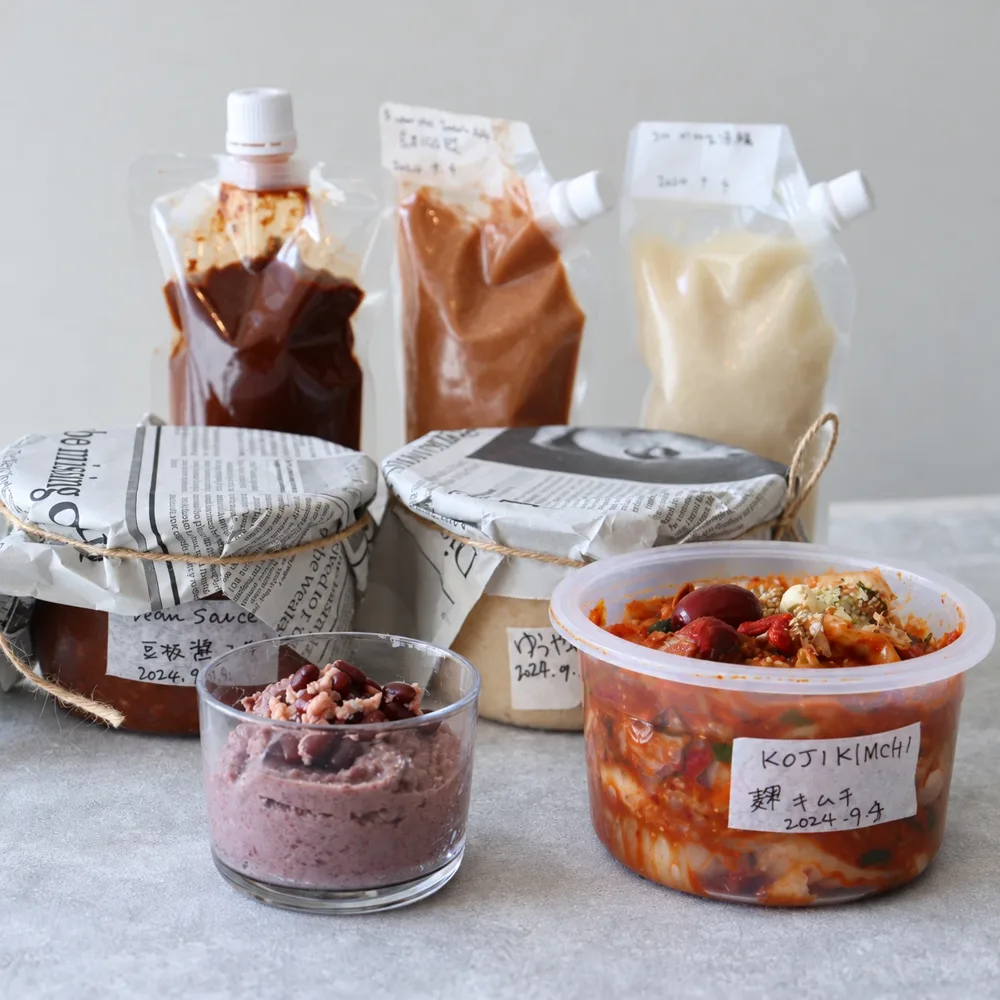
You prepare a range of fermented seasonings, and widen your repertoire with fermented spices, fermented cacao and more.
- 04
Expand and design
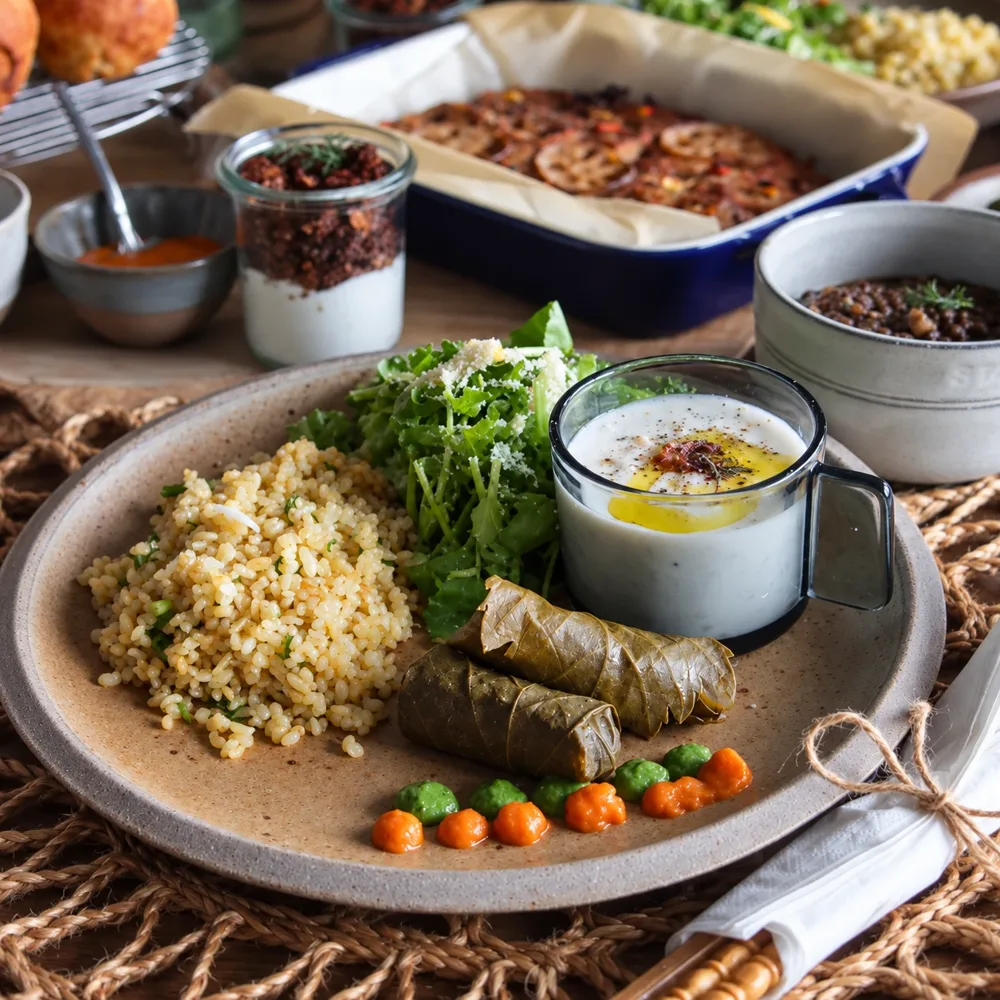
You use your fermented seasonings in dishes and sweets. You design your own fermentation, taste it and express it.
- 05
Go deeper into the science
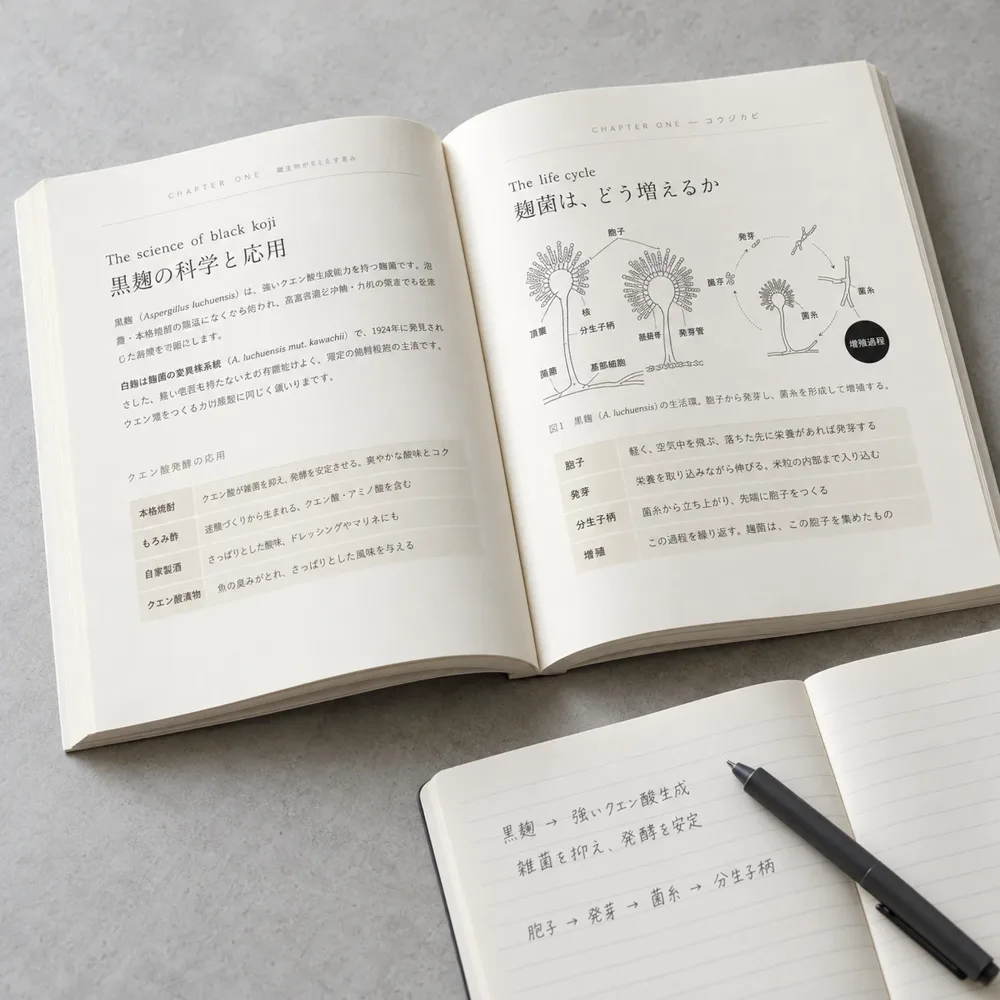
You go further into how microbes and enzymes work, and how acid, sugar and salt shape fermentation. Understanding how it works becomes the ability to create your own flavour.
What you will learn
- How umami works, and what enzymes do
- Black and white koji compared, and temperature control
- How yeast and lactic acid bacteria live together
- Acid fermentation and vinegar (fermented vinegar, awasezu blends, the theory of sushi vinegar)
- Vegetable sushi
- Developing fermented spices and fermented sweets
- Homemade yeast bread (sakadane yeast and wild yeast)
- Fermented cacao miso
- White koji amazake
- Fermented genovese
- Fermented pickles and salted lemons
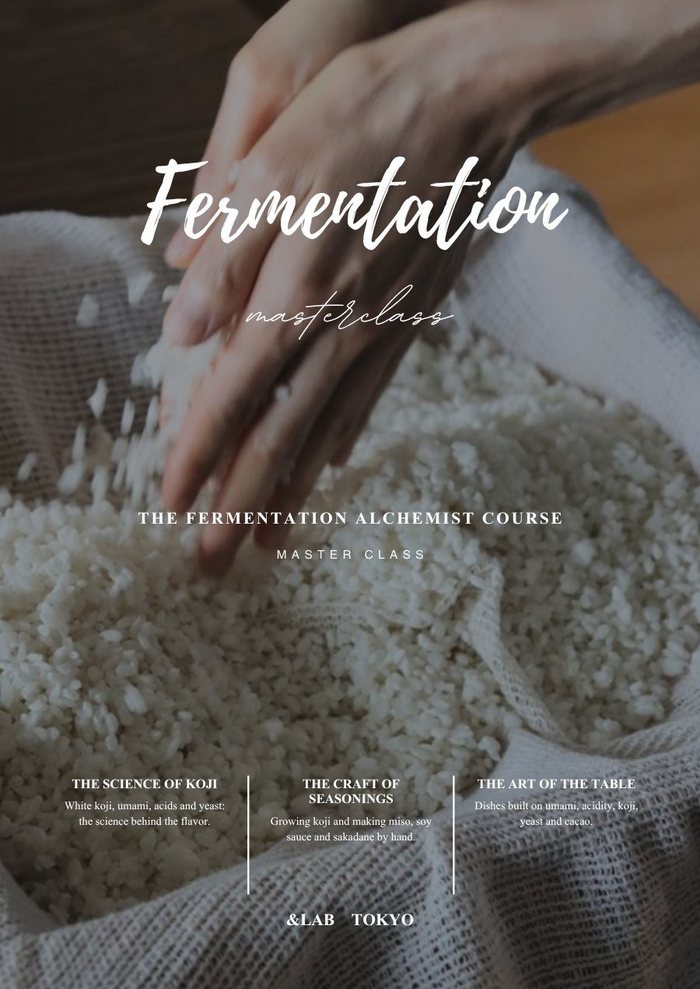
From the textbook’s recipes
A selection of the recipes in the Master official textbook.
- White koji seasonings
- White koji amazake, White koji yuzu jam, Citric shoyu-koji, Citric shio-koji
- Miso and jang
- Mame-miso (soybean miso), Shiro-miso (white miso), Traditional tianmianjiang (sweet bean sauce), Kan-koji, Cacao miso, Fermented tempeh jang
- Fermented spices, vinegars and drinks
- Fermented yuzu kosho, Shikuwasa kosho, Fermented curry koji, Vegetables simmered in sweet red vinegar, Vegan ratatouille with red vinegar, Koji syrup, Fermented craft cola, Kombucha
- Vegetables, sweets and yeast
- Koji yakuzen mul-kimchi (water kimchi), Sauerkraut, Beetroot shio-koji hummus, Fermented pound cake, Wobbly white koji amazake pudding, Sakadane yeast and yoghurt yeast, Homemade yeast bread
- Creative dishes and lunch
- Fermented Peruvian (ceviche, causa), Red vinegar inari sushi (vegetable sushi), Vegan pho, Root vegetable potage with yeast water, Fermented genovese, Cacao mole, Fried doughnuts with vegan custard
In the lesson, you cook with the fermented seasonings made that day. The dishes vary from session to session.


Master is for you if…
- You want to learn koji-making in earnest
- You are interested in the next generation of fermented foods (white koji, black koji, cacao fermentation)
- You want to adapt fermented seasonings yourself and develop new fermentation recipes
Making what you have learned your own.
Hakko Soka®
Fermentation Alchemist Course — Professional Level
Beyond learning fermentation.
Opening a class. Serving it as food.
Choosing a theme of your own and researching it more deeply.
Hakko Soka® is the class where you take everything you have learned further, in your own way.
For people who want to use it in their work, and for people who simply want to explore fermentation.
From here, you work with fermentation through a theme of your own.
Hakko Soka® is a registered trademark of Chie Ando.
Planning for real activity.
You think concretely about what you would like to do: classes or workshops, serving food at a café, cooking for others.
You plan and run simulations, and where possible, go as far as actually holding and running it.
Digging deep into one theme.
You take a kind of fermentation that interests you as your theme, and research it by reading, testing and comparing.
It does not have to lead to work. Simply wanting to know more is reason enough to explore fermentation in depth.

In the Hakko Soka® class, you study with a dedicated Hakko Soka Reader. It is included in the course fee.
What this class goes into
- Choosing your own theme and researching fermentation
- Keeping up with current developments and research in fermentation
- Thinking, testing and reflecting for yourself, based on what you have learned
- Planning and practice with classes and workshops in mind
- Branding and product development for fermented foods
After you have learned.
There is more than one way to use what you deepen in Hakko Soka®.
- Continuing to research fermentation through your own theme
- Creating original fermentation recipes and foods
- Opening your own class or workshop
- Bringing fermentation into café or cooking work
- Teaching The Fermentation Alchemist Course and other fermentation lessons
Beyond what you learn, a fermentation road of your own.
Overseas Fellow
Take the Japanese fermentation you meet in Tokyo into your own future.
Teaching it to someone.
Bringing it into your cooking or your work.
Researching what fermentation does, and going on exploring it.
There is more than one way to live with fermentation.
- Hakko Soka®
- A certification for those who deepen their knowledge and skill and grow fermentation culture in their own way.
A title that marks how far you have taken your learning. - Overseas Fellow
- &LAB TOKYO's way of supporting what comes next for those who travel to Tokyo to learn.
Particular support for people living outside Japan who are working towards that title.
ShareSHARE
Passing on what fermentation can do, through classes and workshops.
Making a new place to learn, in your own country or region.
ExploreEXPLORE
Researching microbes, how fermentation works, how ingredients change.
Finding a theme in your own curiosity, and going deeper.
CreateCREATE
Cooking, product development, work with food culture, everyday life —
using what you have learned in a way that is your own.
These three are not formal divisions of the certification. They are a way of picturing who you might become.
The Overseas Fellowship is selective — a few people each year.
For those who study fermentation in Tokyo and go on to share it in their own country,
we support the path to the Hakko Soka® certification.
It exists to back your feeling for fermentation, and whatever you take on next.
Overseas Fellow — a special rate Please ask
Who this is for
- You live outside Japan
- You have completed three days or more of Basic + Advance or beyond, in person at the Tokyo studio — or you are planning to
- Within a year of finishing, you intend to do something with fermentation in your own country: teaching, research, creating, or otherwise
About the scheme
- A few places each year, chosen from the applications we receive
- What you may teach matches what you completed: three days covers Basic and Advance, and Master as well if you have taken it
- Hakko Soka® is a title for passing fermentation on correctly (a formally registered trademark in Japan)
To apply
What would you like to make real, beyond what you have learned?
Holding classes, taking on research, bringing it into your cooking or your work — the shape of it differs for everyone.
Through the application form, tell us your experience so far, what you would like to take on, and what you would say for yourself.

Taught by Chie Ando
Drawing on more than ten years of teaching fermentation and raw food, Chie teaches not just recipes but how koji, microbes and fermentation work.
From “I can make it” to “I understand it”, and on to “I can think it through myself” — we grow that together.
For vegans, and for everyone else
The fermentation course teaches both ways: using only plant-based ingredients, and using animal-based ones. Vegans and non-vegans take the same lesson. We cook with seasonal ingredients, so please tell us your preference when you apply.
What students say
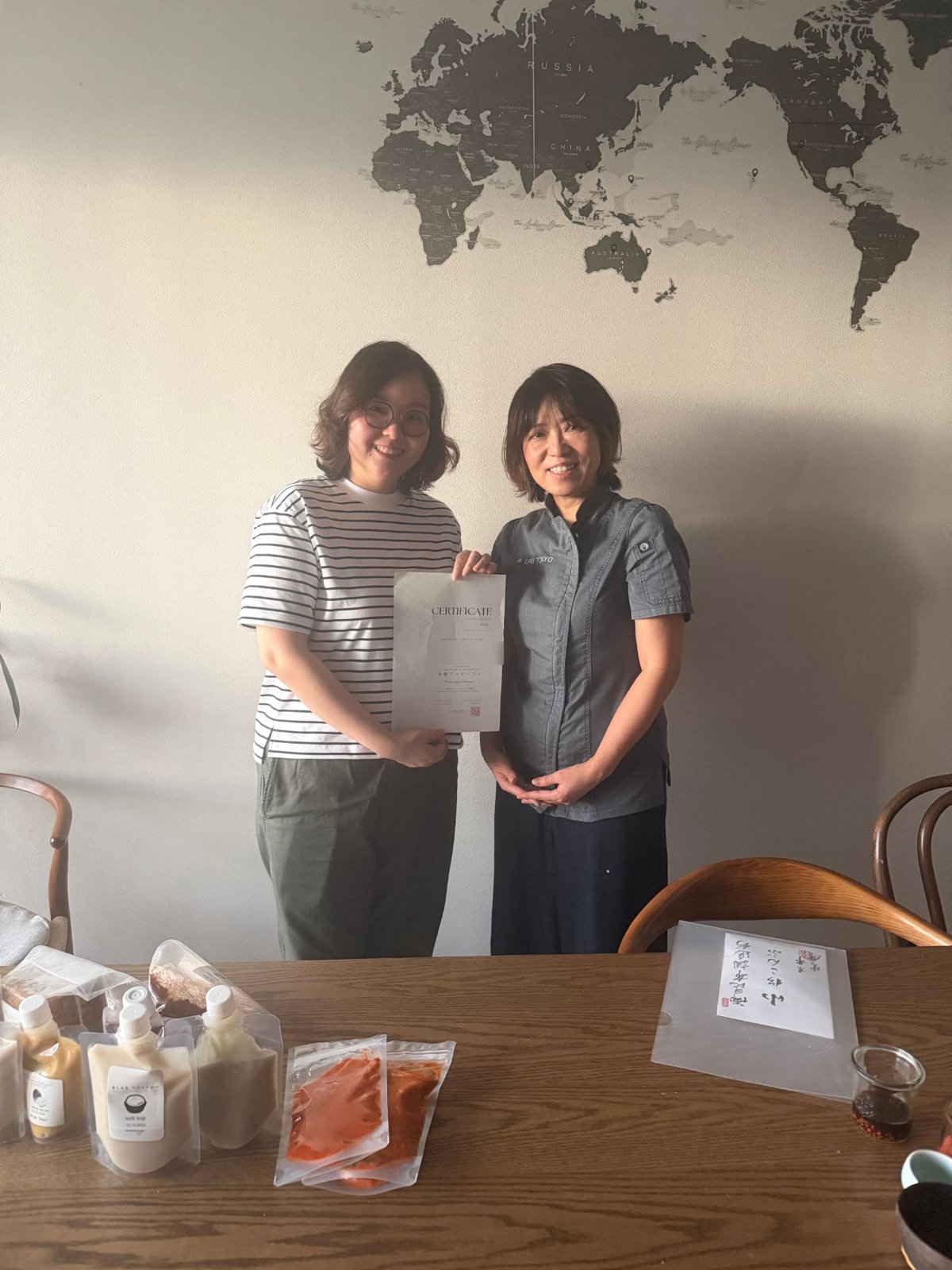
“What I really loved was the balance between science + creativity.”
I had such great time at this course. I learned so much, not just about fermentation itself, but also how to [think] differently about ingredients, flavors, and the possibilities of Koji.
What I really loved was the balance between science + creativity. The teacher was amazing at making even complicated concepts feel simple and easy to understand. Everything was explained so clearly and naturally, which made learning both fun and enjoyable.
It was such an inspiring experience, and I’m excited what I’ve learned and start own experiment with my own ideas and Thai ingredients.
Thank you so much for sharing your knowledge, passion, and making such a wonderful experience!!!
— Joy, ThailandThe Fermentation Alchemist Course · October 2026
I use the fermented seasonings I made on the course every day. I have stopped buying shop-bought ones altogether.
Woman in her 30s
I live alone and used to find cooking for myself a chore, but fermented seasonings have made cooking fun. It was a chance to rethink how I eat.
Woman in her 30s
I started using fermented seasonings as part of caring for my body's inner environment. Now I can make them easily at home. The classroom part was thorough too — a very full lesson.
Woman in her 40s
Fermented seasonings bring out the flavour of the ingredients, so I use them all the time. My whole family loves the food, and I’m glad I went to the class.
Woman in her 40s
How to join — Jingumae, Tokyo, or online
You can join in person or online. Lessons are taught in Japanese; English support is available on request.
In the studio, Jingumae, Tokyo
The studio is in Jingumae, Shibuya-ku, Tokyo, within walking distance of Gaienmae, Omotesando, Sendagaya and Kokuritsu-Kyogijo stations. Groups are small, and all tools are provided. We send the exact address once you have applied. English support costs ¥15,000 per day (tax included), or ¥12,000 per day if requested three months or more in advance. Please request it at least one month before the course, so that we can prepare the materials and book an assistant.
Online, from anywhere in Japan or abroad
Every step can be taken online. You will need a fermentation box at home from Basic onwards, since that is where you make shio-koji and ama-koji. You will need something that holds a steady low temperature — a yoghurt maker, or an Instant Pot. Please contact us for details.
POPULAR
Intensive course — Basic + Advance in three days
You can take Basic and Advance together. Because you are growing koji, the course runs over three consecutive days. Recommended if you are travelling from far away or have little time.
Textbooks included (two books: Basic and Advance)
Course fees
| Step 1 — Basic (beginner)textbook included | ¥42,500Tax excluded |
|---|---|
| Step 2 — Advance (intermediate)textbook included | ¥123,000Tax excluded |
| Step 3 — Master (advanced)textbook included | ¥123,000Tax excluded |
| Step 4 — Hakko Soka® (instructor level) | ¥103,000Tax excluded |
| Intensive (Basic + Advance, three days)Normally ¥165,500 / textbooks included (two books: Basic and Advance) | ¥156,000Tax excluded |
- All prices are tax excluded. Consumption tax is added.
- The official textbook (English edition) is included in the course fee (worth ¥3,000 per course).
- If you join online, you will need a fermentation box from Basic onwards — a yoghurt maker, or an Instant Pot.
- Lessons are taught in Japanese. English support is an optional extra: ¥15,000 per day (tax included), or ¥12,000 per day if requested three months or more in advance, with at least one month’s notice. Prices and content may change without notice.
Fees are correct as of the date above.
Frequently asked questions
Can I join if I am completely new to fermentation?
Yes. Basic is designed for people who are interested in fermented foods but don’t know where to start. You learn the basics and history of fermentation and what koji mould, yeast and lactic acid bacteria do, and you make shio-koji, ama-koji, moromi shoyu and more. It is one intensive day.
How much does it cost in total?
Basic ¥42,500, Advance ¥123,000, Master ¥123,000 and Hakko Soka® (instructor level) ¥103,000, all tax excluded, textbook included. The intensive course, which combines Basic and Advance over three days, is ¥156,000 (normally ¥165,500), also textbook included. English support, if you need it, is charged separately.
Can I take the course online?
Every step can be taken online. You will need a fermentation box throughout: from Basic you make shio-koji and ama-koji in it, and for Advance and Master you grow the koji itself. You will need something that holds a steady low temperature — a yoghurt maker, or an Instant Pot. Please contact us for details.
ABOUT LANGUAGE. Lessons are taught in Japanese. Chie's English is communication English — enough to talk and work together, but not enough to explain something like koji temperature control in the detail you would want. For that, English support (an English-speaking assistant alongside us) can be arranged as an option, for an extra fee. There are dates when it cannot be arranged, so please ask us first.
Where are the lessons held?
In-person lessons are held in Jingumae, Shibuya-ku, Tokyo, within walking distance of Gaienmae, Omotesando, Sendagaya and Kokuritsu-Kyogijo stations, in small groups. We send the exact address once you have applied.
Why is Advance three days in a row?
Because you are growing koji. Once tane-koji has been sown on rice and the koji is growing under temperature control, the process cannot be paused, so the course runs over three consecutive days. The intensive course (with Basic) is three days for the same reason.
Do you cater for vegans and allergies?
Yes. The fermentation course is open to vegans and non-vegans alike. We teach both ways: using only plant-based ingredients, and using animal-based ones. Please tell us about any food allergies or dietary requirements when you apply. Our kitchen uses a wide range of ingredients, including soy, nuts, sesame and fermented seasonings. Although nuts may not be used in your class menu, they are handled in the same kitchen.
Can I open my own class after finishing?
Once you complete Step 4, Hakko Soka® (the instructor class), you can hold the Fermentation Alchemist Course (発酵アルケミストコース, formerly 発酵プランナー養成講座 / Hakko Planner Course) and a range of fermentation lessons. You learn how to run a course (finding students, designing a course, using social media), current trends and research in fermentation, and branding and product development for fermented foods, and you receive the Hakko Soka Reader.
Can I join from overseas? Is there English support?
Yes. Lessons are taught in Japanese and can be joined in simple English. English editions of the official textbooks (Basic, Advance and Master) are available. For the three-day classes (Basic + Advance, or Master), which deal continuously with koji temperature control and theory, we recommend booking English support. English support is available on request for an extra fee: ¥15,000 per day (tax included), or ¥12,000 per day if requested three months or more in advance. Please let us know at least one month before the course, as we prepare the materials and book an assistant. We also offer koji experiences in English: TOKYO KOJI EXPERIENCE | KIKI KOJI LAB / UMAMI & KOJI LAB
Visiting Tokyo for a short time?
This course is a longer study, taught in Japanese. If you are visiting Japan, our koji experiences for visitors are taught in English and take two to four hours. UMAMI & KOJI LAB, our signature experience, is the closest to this course: it is developed from its koji and umami studies.
Apply, or ask us anything (free)
If anything is unclear, please ask. A member of our team will reply within three business days. Every lesson can be made vegan.