
From India to Tokyo
A Flavorist from India Came to Study Koji in Tokyo
Can koji be grown on Indian grains and pulses?
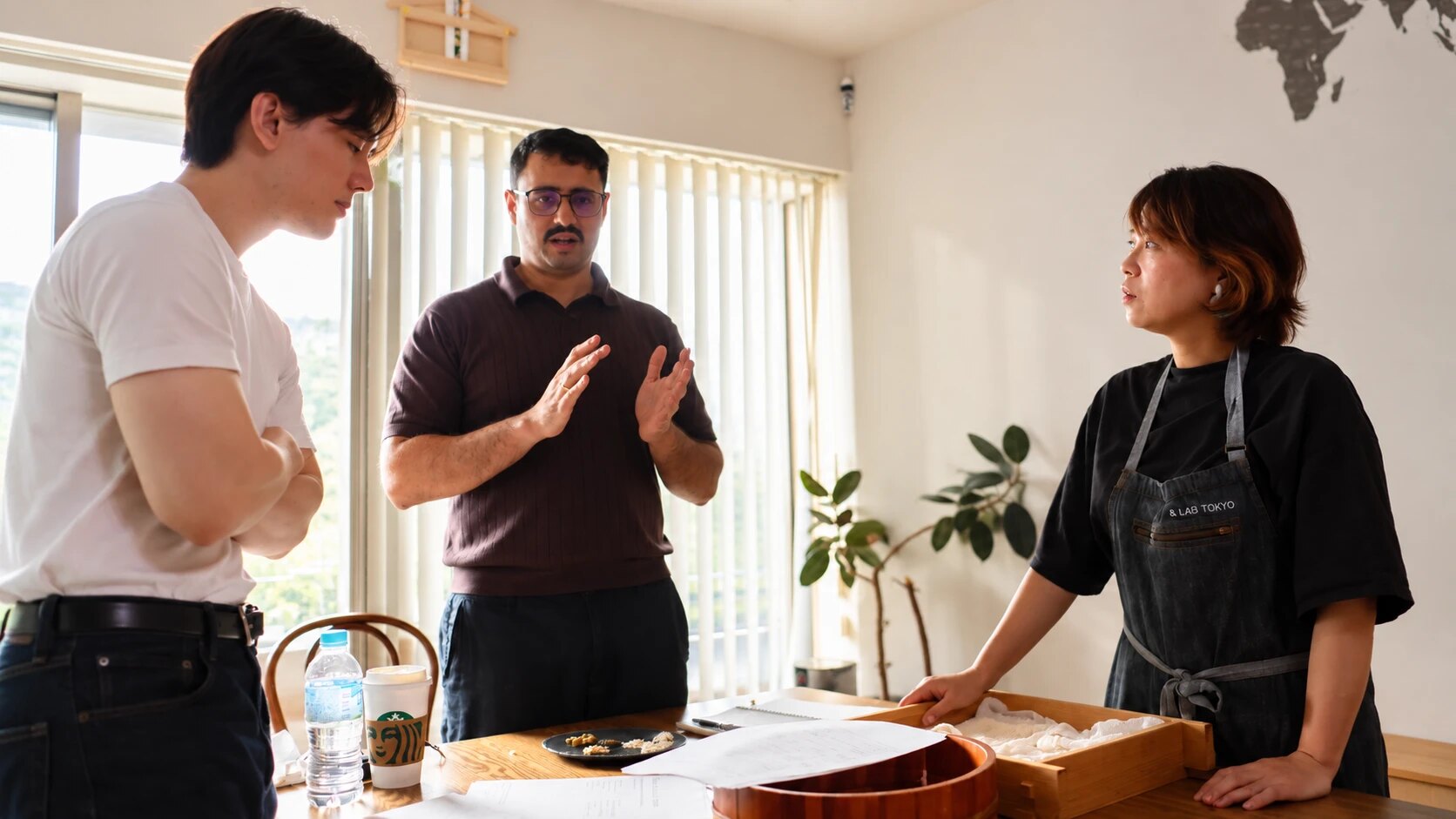
Our guest had never made miso. Or koji.
But when a flavorist and biotechnologist from India came to &LAB TOKYO, our small kitchen in Jingumae, Tokyo, the questions arrived long before the lesson did, and they went far beyond a beginner’s class.
Could koji grow on basmati rice? What about urad, mung, masoor or chana dal? Foxtail millet, barley, peanuts? How would their different compositions change fermentation, enzymes and flavour?
This became much more than a koji lesson.
The questions came first
Before the session, our guest sent us a list of what they wanted to explore. It read like the notes of a working scientist:
- Whole soybeans and soy flour, and the possibilities of basmati and other rice
- Maize, barley, peas, peanuts, foxtail millet, and dal: urad, mung, masoor and chana
- Composition data for each ingredient, sent ahead so we could discuss how each might affect miso and fermentation
- A technical approach: microbiology, enzymology and sensory evaluation
The goal was to learn both the principles and the practice, well enough to reproduce them back home in India.
Beyond the standard course
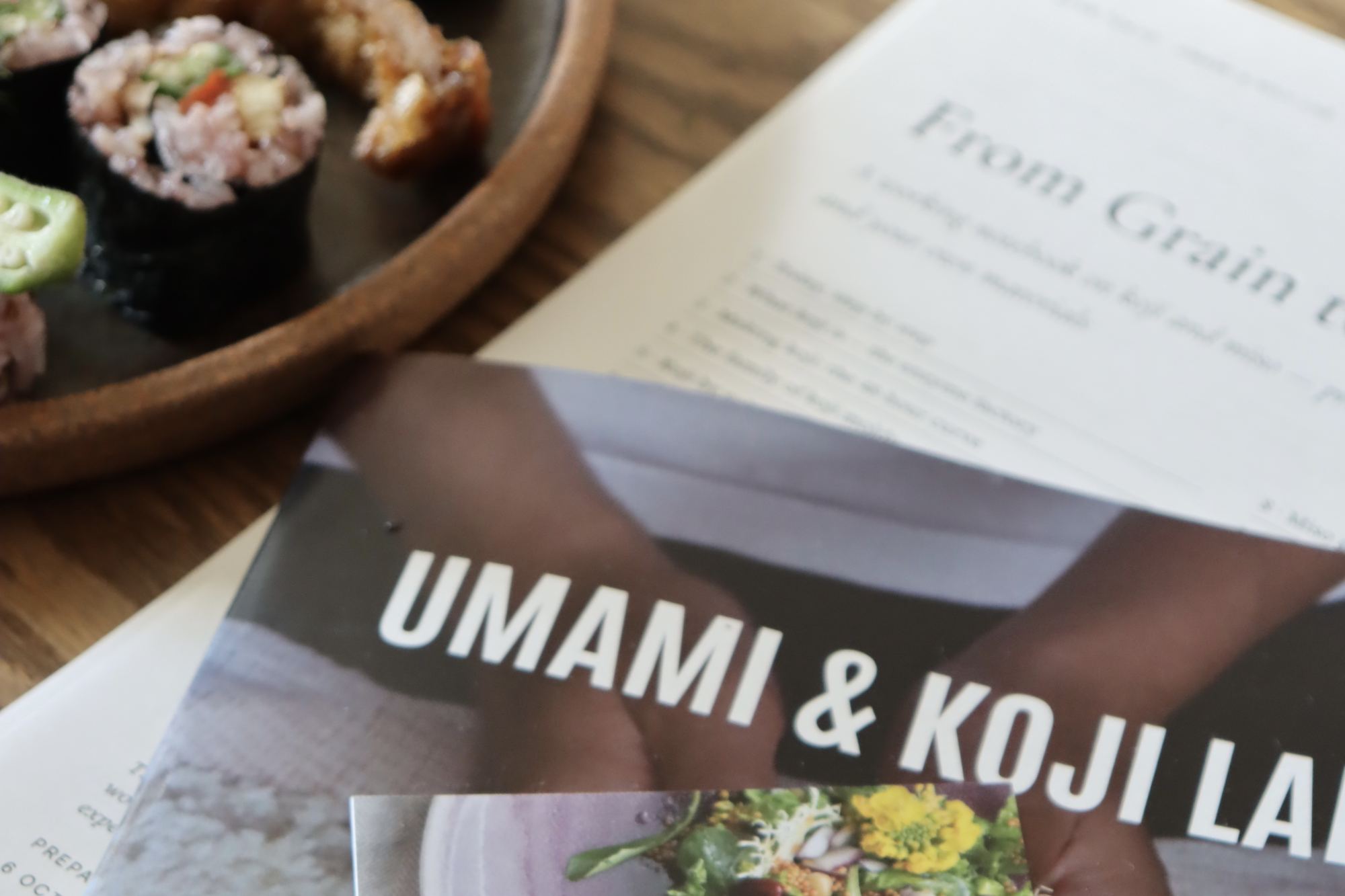
UMAMI & KOJI LAB is built around a core program, supported by an English textbook of approximately 100 pages. When guests have a particular area of interest, we ask them to tell us in advance so we can determine what can reasonably be covered.
This time, the requests went much further. Our guest had shared professional questions and detailed composition data before arriving in Tokyo, so alongside the standard course, we prepared a separate 15-page supplementary workbook, From Grain to Umami, specifically for this session. When the workbook was opened on the table, our guest’s eyes lit up.
Bridging the technical parts
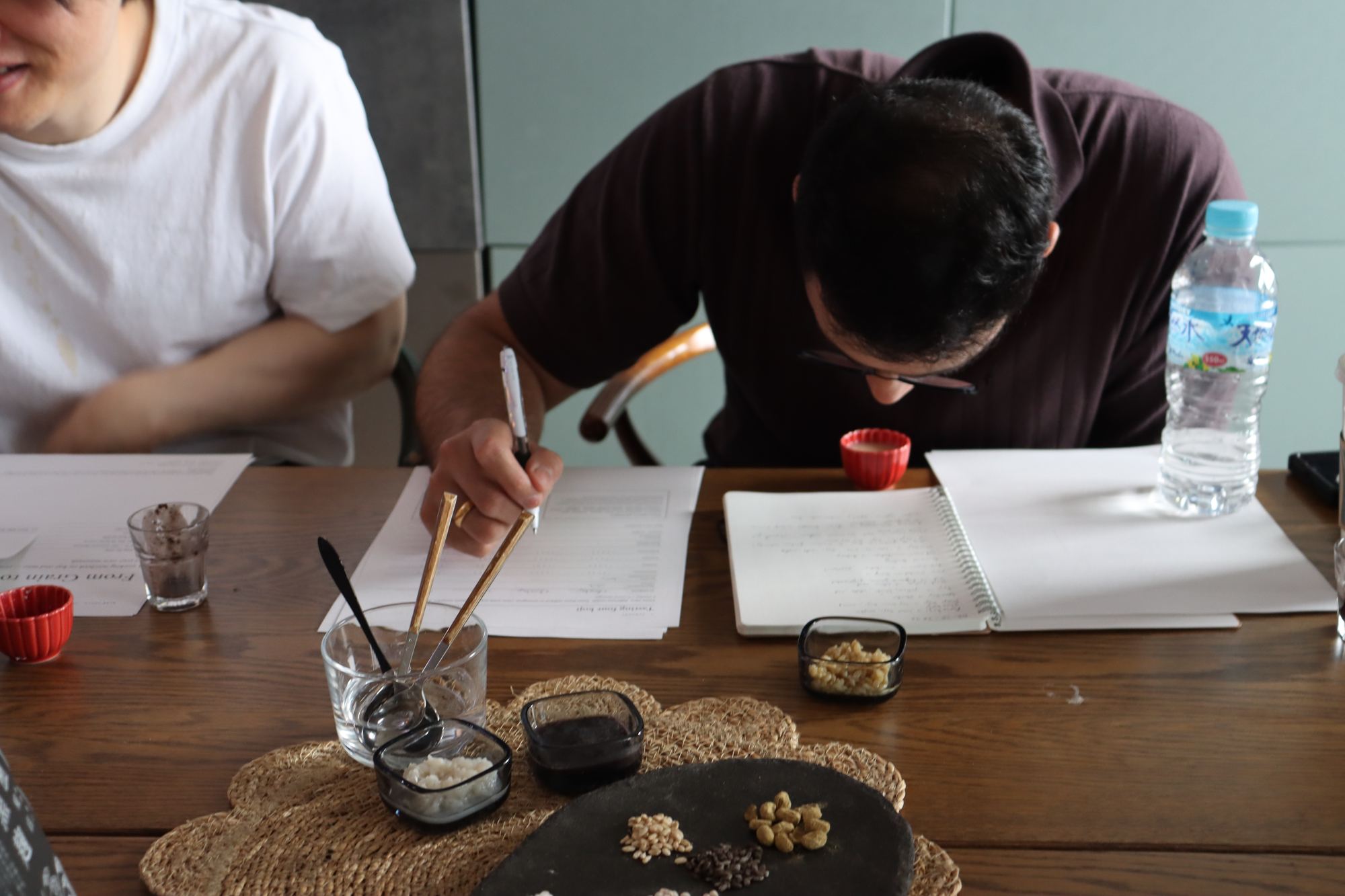
Chie Ando, who founded &LAB TOKYO, teaches in simple English. For this session, an American member of our support team joined us to help bridge the more technical parts of the discussion, together with a team member who studies fermentation alongside Chie. Terms from microbiology, and the finer points of how koji mold behaves, could be discussed precisely, and the conversation kept going deeper.
What we did
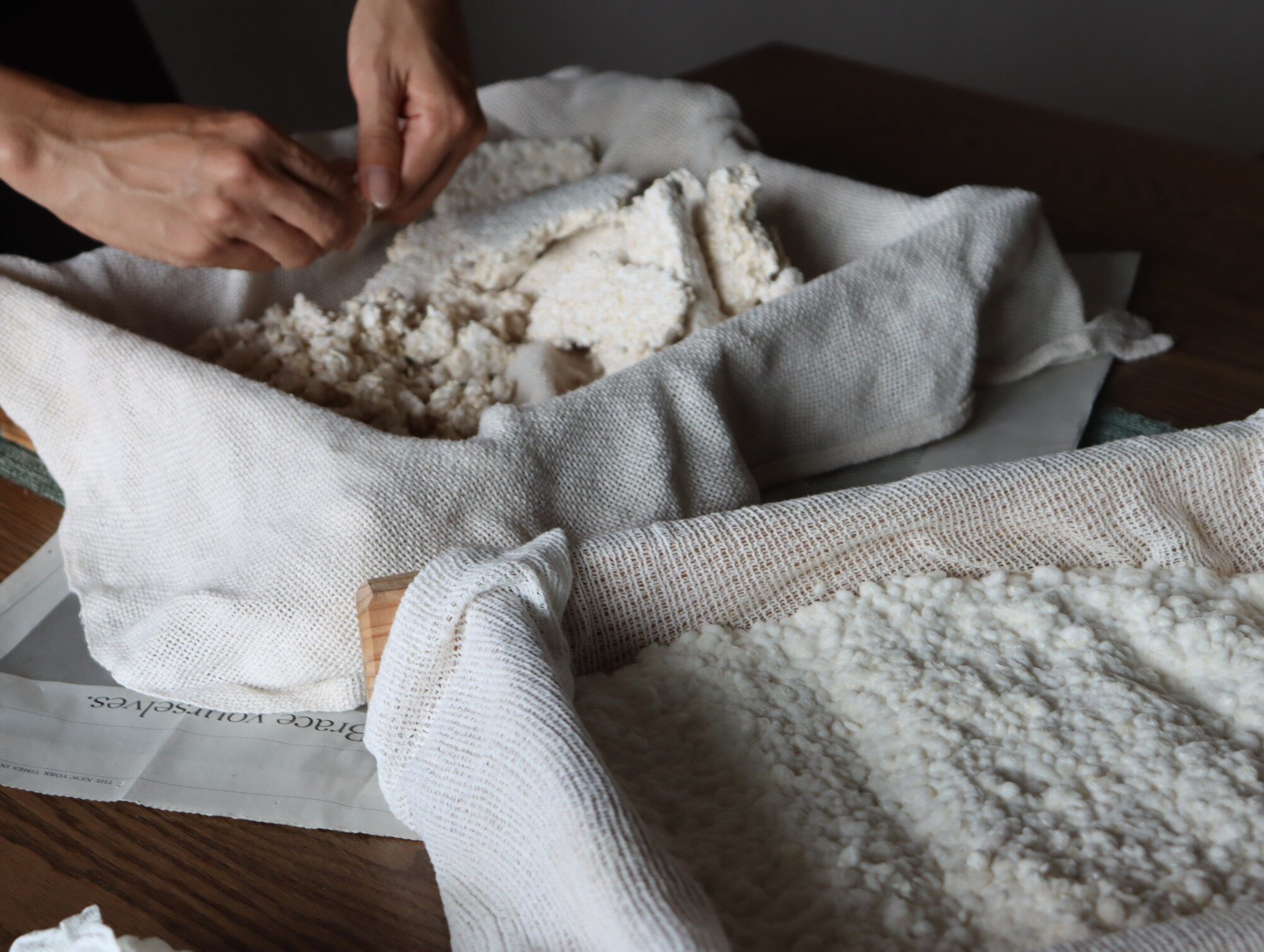
- Inoculate
Steamed rice and tane-koji
Sowing koji spores onto steamed rice by hand, with guidance on how tane-koji is used.
- Compare
Several kinds of koji
Making ama-koji, then tasting several kinds of koji side by side.
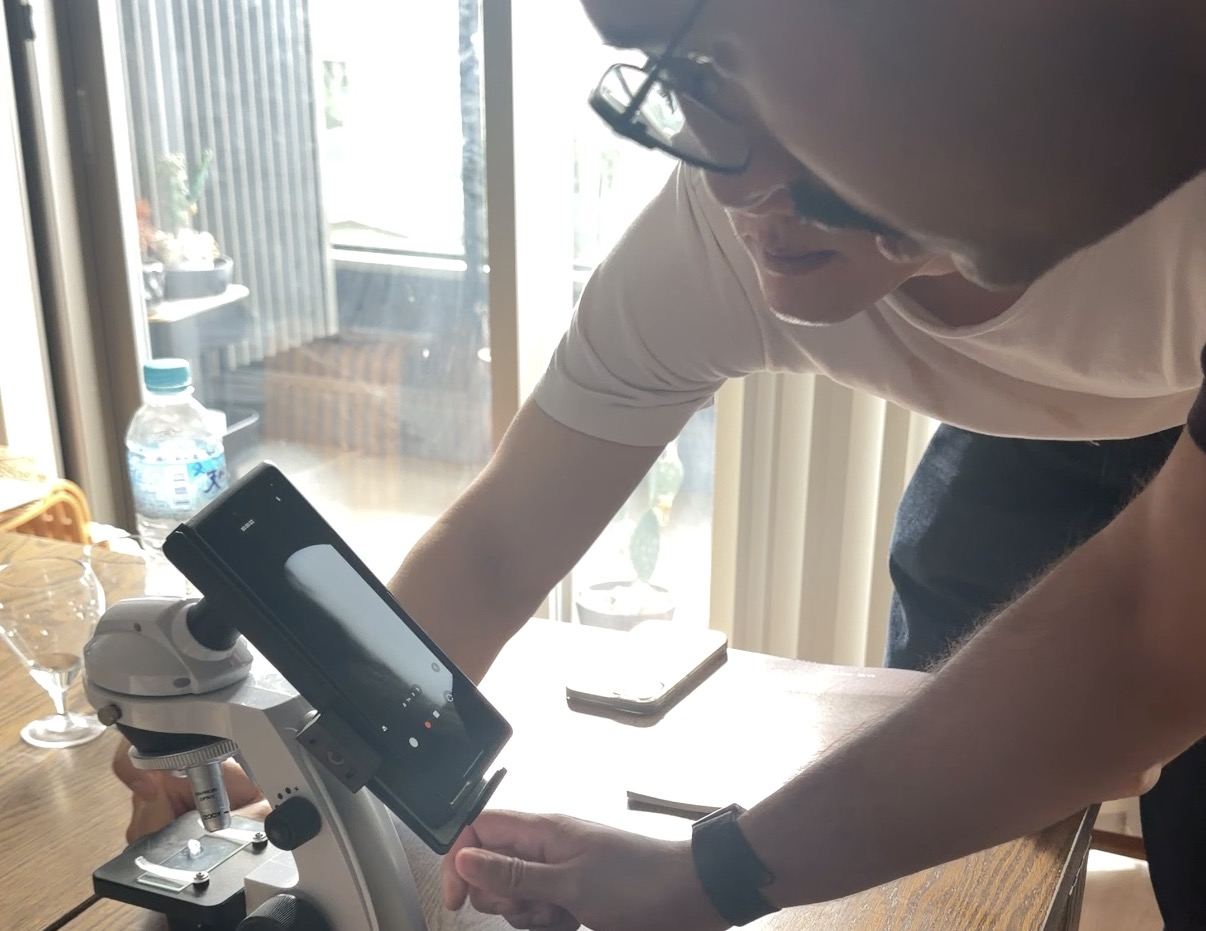
- Observe
Koji under the microscope
Looking at koji mold, its hyphae and spores, through the microscope.
- Discuss
Indian grains and pulses
Pulses brought from India: could they become koji? And what about natto?
- Make
A miso session, added
Miso is not part of a standard UMAMI & KOJI LAB session. Because it was requested in advance, we added how miso works and a hands-on miso session.
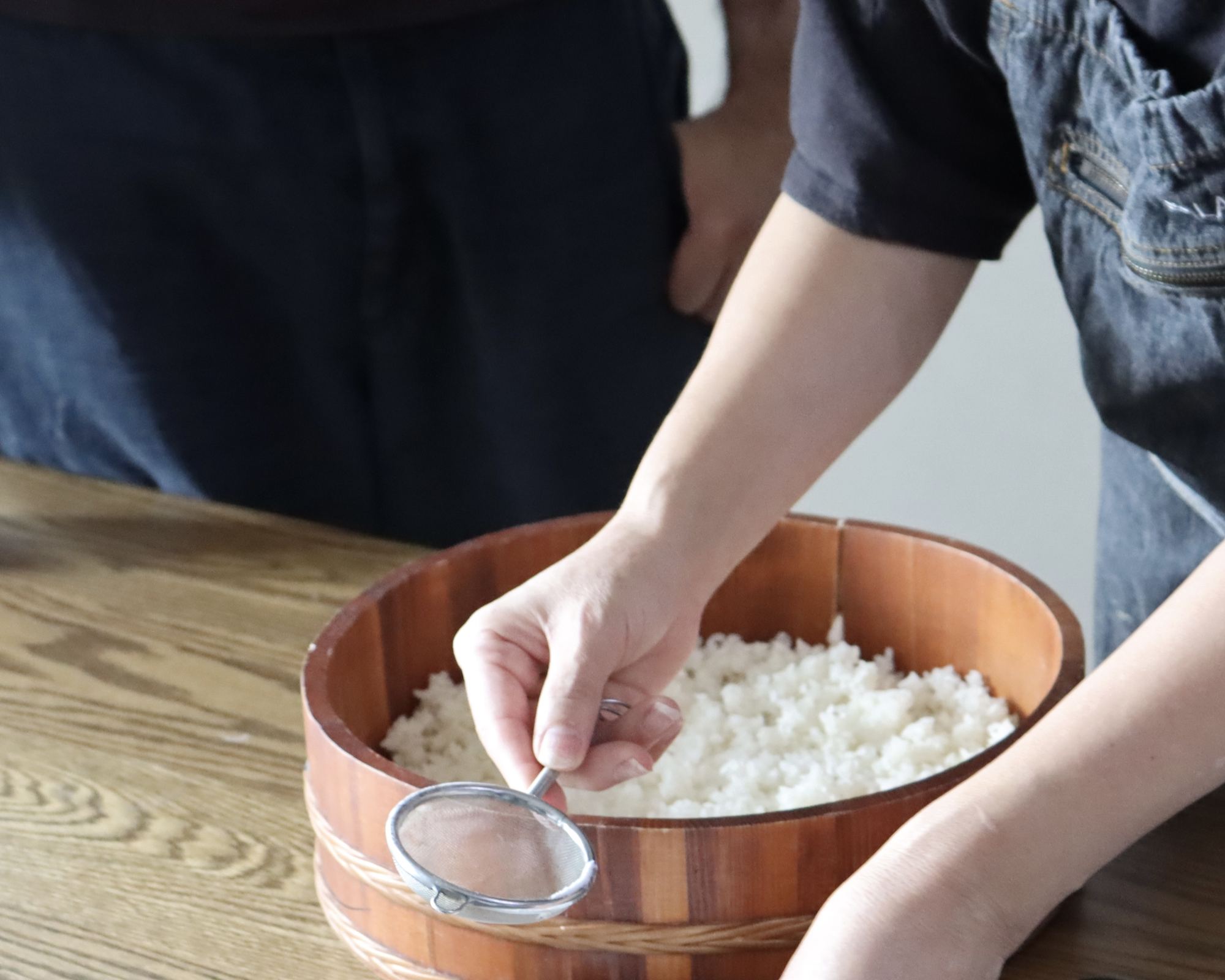
Our guest took notes throughout and kept asking: how could India’s many pulses and rices open a fermentation culture of their own? Questions like that bring a kitchen to life.
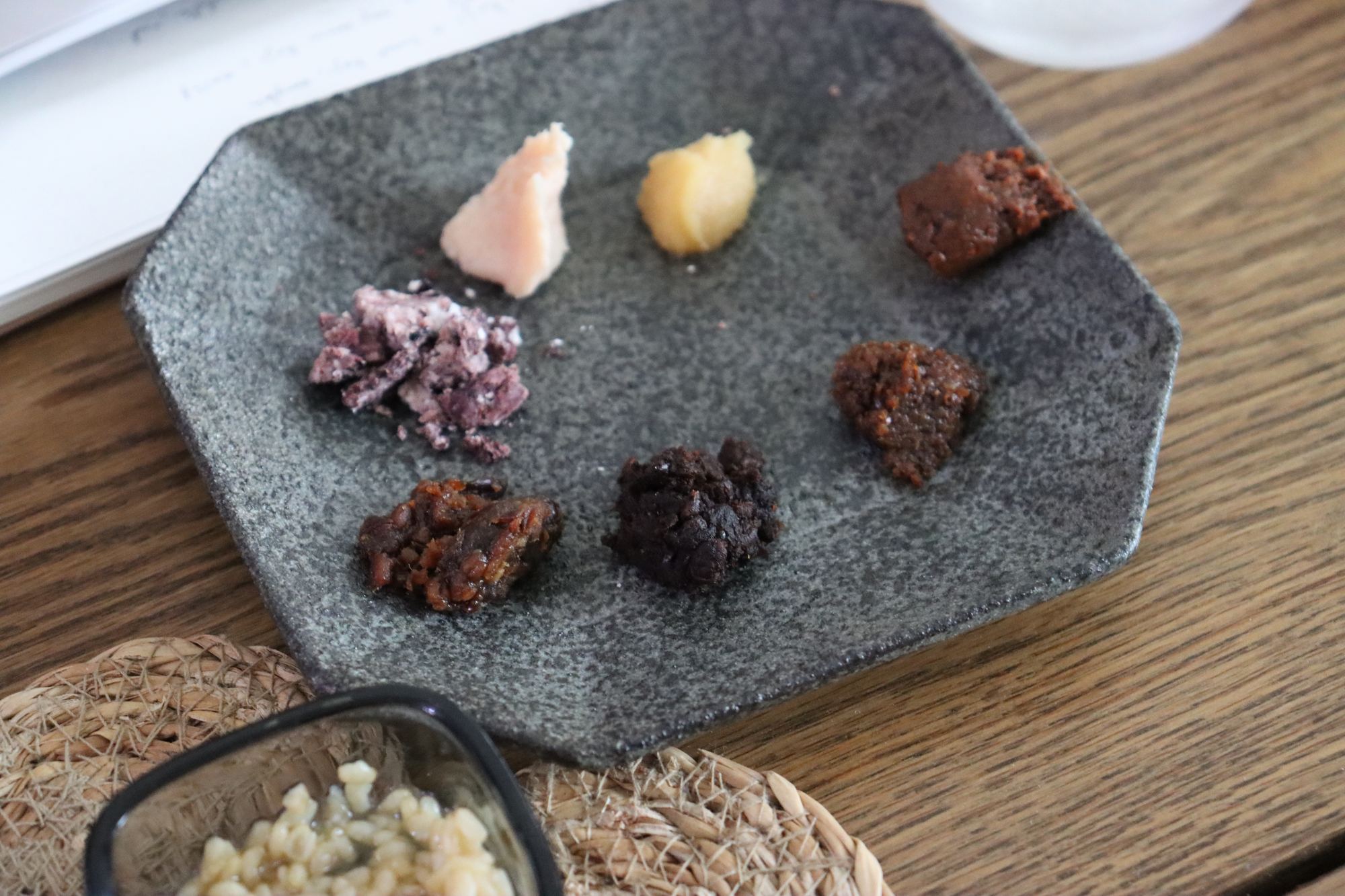
In The Fermentation Alchemist Course we make a wider range of koji seasonings: not only shio-koji and ama-koji, but versions made with onion or garlic, or with blended curry spices. They are not limited to Japanese cooking, and that is what makes koji useful in other kitchens. Miso is not part of a standard UMAMI & KOJI LAB session; because it was requested well in advance, we added how miso works and a hands-on miso session. Of everything on the table, the cacao miso we make in class was the favourite.
We also put out the more unusual misos we make for ourselves. Guests taste them, and almost everyone says they want to try making them at home. People who come to this lesson are curious by nature, and that curiosity carries past any gap in language.
At the table
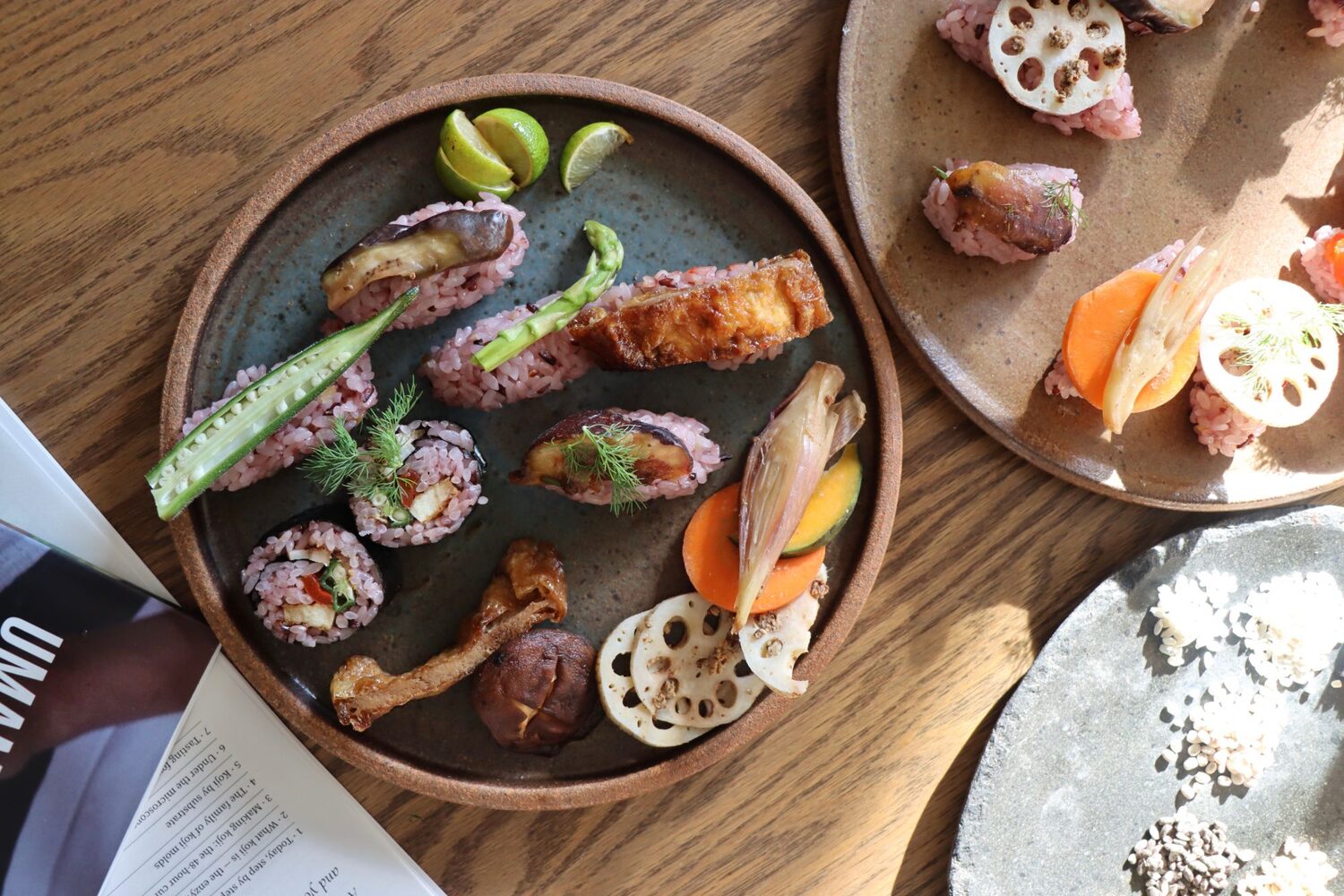
The session ended around the table with the &LAB TOKYO Signature Lunch. Our guest went home with a soy sauce-making kit, rice koji, hishio koji, tane-koji, our special sushi vinegar and both textbooks.
Where koji meets other kitchens
Countries, cultures and languages differ. The wish to understand food, and to find out what makes it taste good, does not. What new flavours will appear when Japanese koji meets the grains, pulses and spices of India? We are already looking forward to finding out.
If you would like a tailored session like this one, please send your request at least two weeks before your date. New material has to be written and the ingredients sourced. Regular bookings close four days before the date, because the koji is prepared in advance.