Spirulina LAB
Spirulina: Tablets or Powder? How to Choose, by Purpose
Seven years of recipes with spirulina, and what we tell people who ask which form to buy
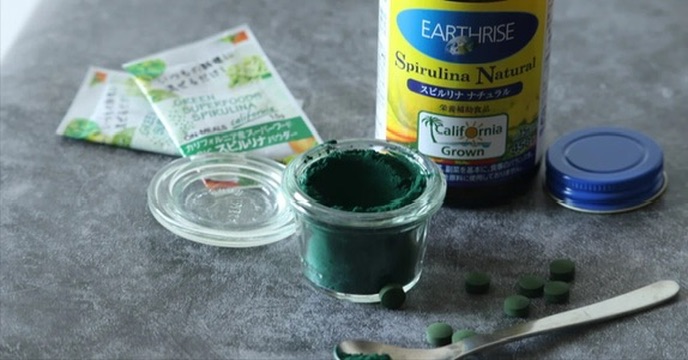
You want to bring spirulina into your everyday life. The first thing you have to decide is which form to buy: tablets or powder.
There is a third option too: Linablue®, a natural blue pigment extracted from spirulina.
After seven years of developing recipes at Spirulina LAB, here is how the three differ, and how to choose the one that fits the way you live.
Start with the purpose, not the product
Spirulina comes in many forms: tablets, powder, green drink mixes, natural blue pigment, and products built around phycocyanin, the blue protein in spirulina.
The useful question is not “which is best?” but “what do I want it for?”. Once that is clear, the choice is usually easy.
Where to start
- Mornings are busy, you dislike the taste of algae, or you travel a lot: tablets.
- You like to cook and want to add spirulina to rice, soups and smoothies: powder.
- You want to make blue drinks or sweets: Linablue®.
- You are still wondering what spirulina actually is: read on, and decide afterwards.
Tablets, powder and Linablue® side by side
| Tablets | Powder | Linablue® | |
|---|---|---|---|
| What it is | Spirulina pressed into tablets | Spirulina ground into powder | Only the blue pigment of spirulina |
| Main use | Swallow with water | Mix into food, sweets and drinks | Colouring food, sweets and drinks |
| Taste and smell | Hardly noticeable | An algae note and umami (strong if you add too much) | Almost none |
| Convenience | Easiest: swallow and go, easy to carry | Takes a little mixing | Dissolve in water, then use |
| Adjusting the amount | By the number of tablets | Freely, spoon by spoon | A tiny amount gives colour |
| Nutrition | Yes | Yes | No (it is for colour) |
| Suits | Busy people, people who dislike the taste, people who want a daily routine | People who cook, people who want to add a little to family meals | People who want to make blue drinks and sweets |
Who tablets suit
In Japan, most of the spirulina sold is tablets. When we looked at the best-seller ranking for spirulina on Rakuten, a major Japanese shopping site, in September 2026, every product at the top was a tablet.
The main reason, I think, is taste. Spirulina has the smell of algae, and when you stir the powder into water, that is exactly what you taste. With tablets you simply swallow them, so the smell hardly registers.
- Your mornings are busy and you have no time to prepare anything
- You dislike the smell of algae
- You want to keep it up when travelling or away from home
- You want the same amount every day
If that sounds like you, tablets are the easier choice.
DIC Corporation, the Japanese maker whose spirulina we use, offers tablets in three versions: Natural, which is spirulina only; NEXT, with added vitamins and lactic acid bacteria; and Plus, which has a coating so the smell is less noticeable.
Who powder suits
The strength of powder is that you can cook with it. Spirulina contains glutamic acid and other umami components, so a small amount pulls the flavours of a dish together.
- You enjoy cooking
- You want to add a little extra nutrition to family meals without anyone noticing
- You want to change the amount depending on the day
- You are not in the habit of taking supplements
It works best with rice and pasta. Stir spirulina into cooked rice with a pinch of salt and a swirl of sesame or olive oil, and it tastes a little like Korean seasoned-seaweed rice.
The one thing to watch is the amount. Too much and the algae note takes over. Start with about half a teaspoon. Heating does not lose much of the nutrition, but the colour changes easily, so if you want the green to stay bright, add it after taking the pan off the heat.
For blue dishes, Linablue®
Linablue® is a natural pigment: the blue phycocyanin extracted from spirulina. Green powder gives you the whole alga and its nutrition; Linablue® is for enjoying the colour. At &LAB TOKYO we use the two for different things.
Our suggestion: use both
You do not have to settle on one. Many members of Spirulina LAB take tablets on ordinary days and cook with powder when they have time.
Tablets for the daily routine. Powder for enjoying the table. Let each do what it does best, and it is easy to keep going.
Spirulina LAB and DIC
Spirulina LAB is a collaboration between &LAB TOKYO and DIC Corporation, and we develop our recipes with DIC spirulina. In 2019, Chie Ando visited DIC’s spirulina farm in California to see how it is cultivated and how quality is controlled.
Before you start
Spirulina is a food, not a medicine. Taking it does not change anything overnight. Think of it as adding to the nutrition of your everyday meals.
- Like natto, spirulina is high in vitamin K. If you take warfarin, avoid it.
- If you are under medical care, pregnant or breastfeeding, talk to your doctor first.
- If it does not seem to agree with you, reduce the amount or stop for a while and see.
Cooking with the powder
Once you have the powder, rice is the place to begin: stir it in with a little salt and oil. From there, soups, hummus, pasta and smoothies all take a small spoonful well. We share Spirulina LAB recipes on the Japanese side of this site, and will bring some of them into English in time.
Written by Chie Ando, cook and founder of &LAB TOKYO, who leads Spirulina LAB. About &LAB TOKYO